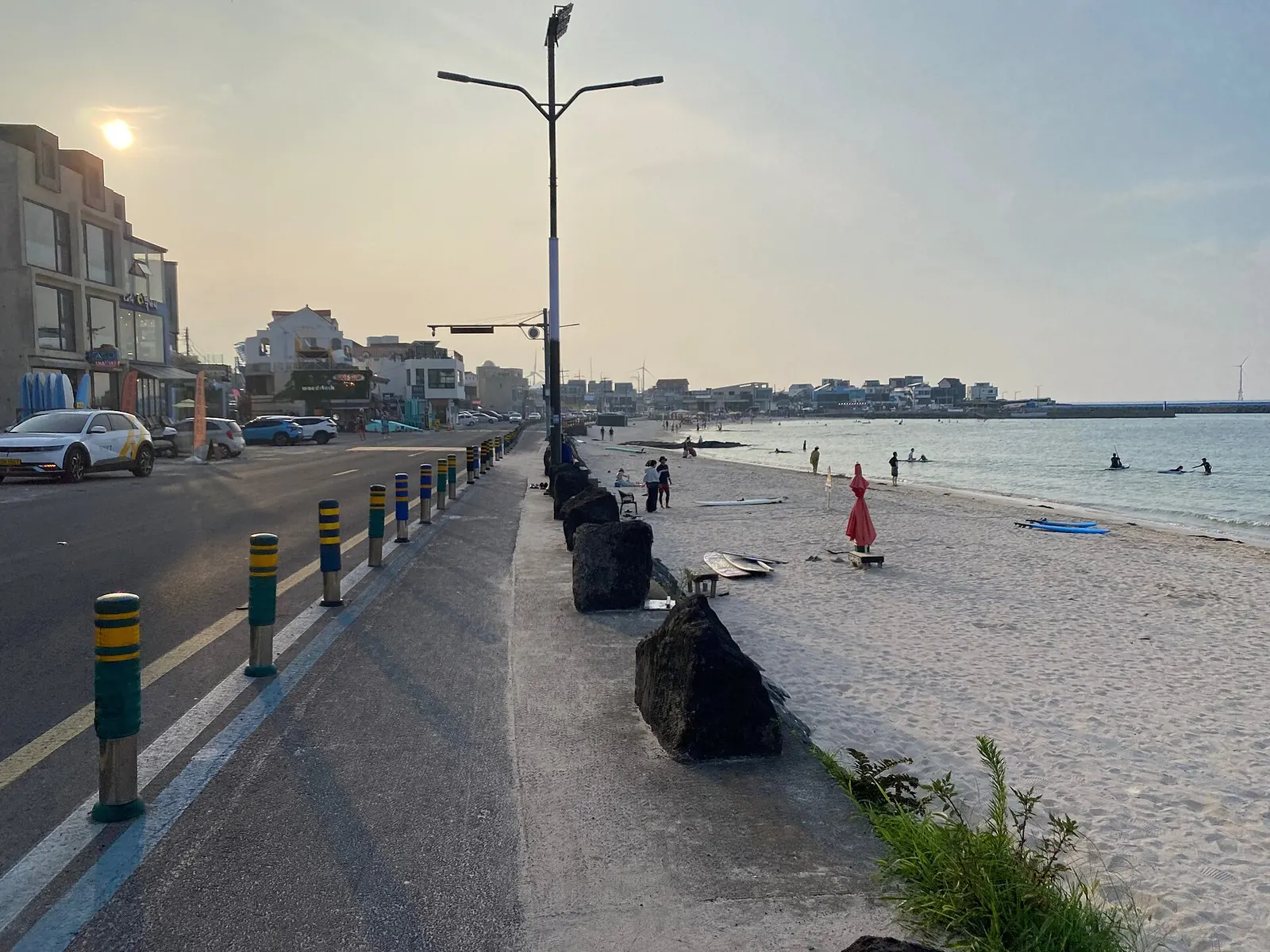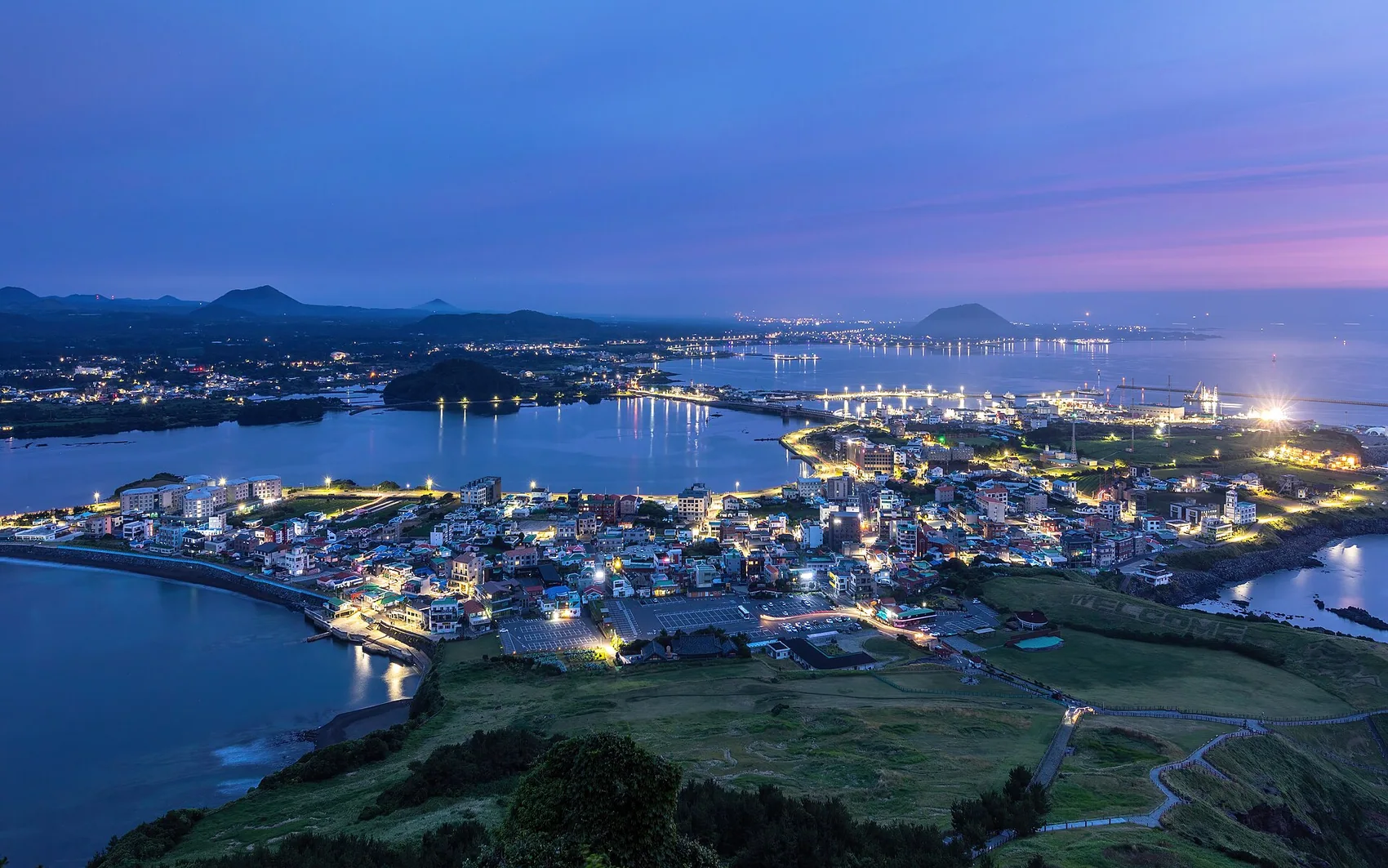
Follow the eastern shore from a volcanic tuff cone to the diving villages and field walls of Gujwa.
In this guide
Why the field walls have gaps
In Gujwa, a few streets inland from the waterfront, dark stone walls curve around small fields. Farmers built them from the uneven lava rock they lifted out of the soil. Wind can filter through the gaps while the wall shelters the crop. From a village road, follow a wall around a bend to see the shape of the plot it protects.
What a diver’s float tells you
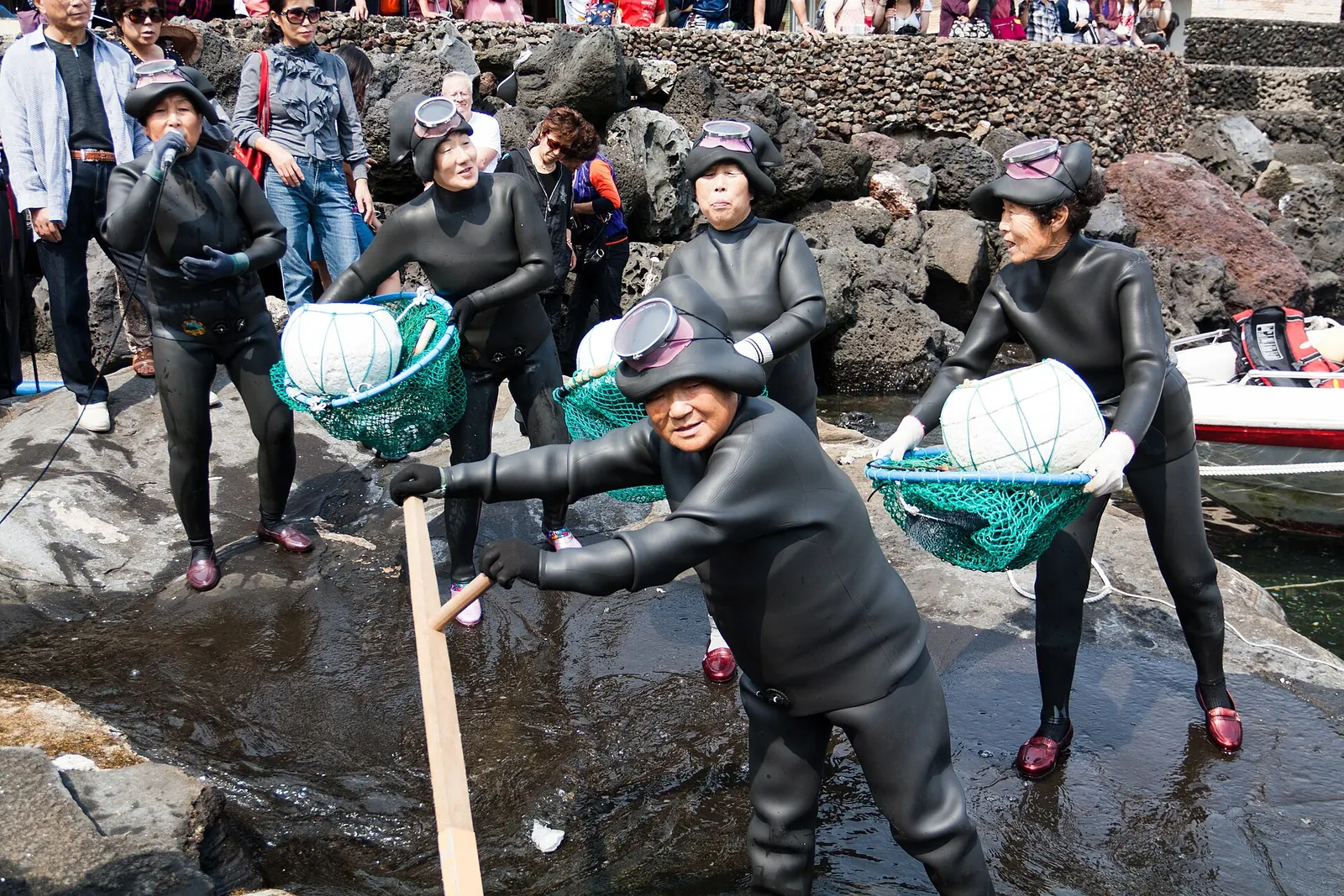
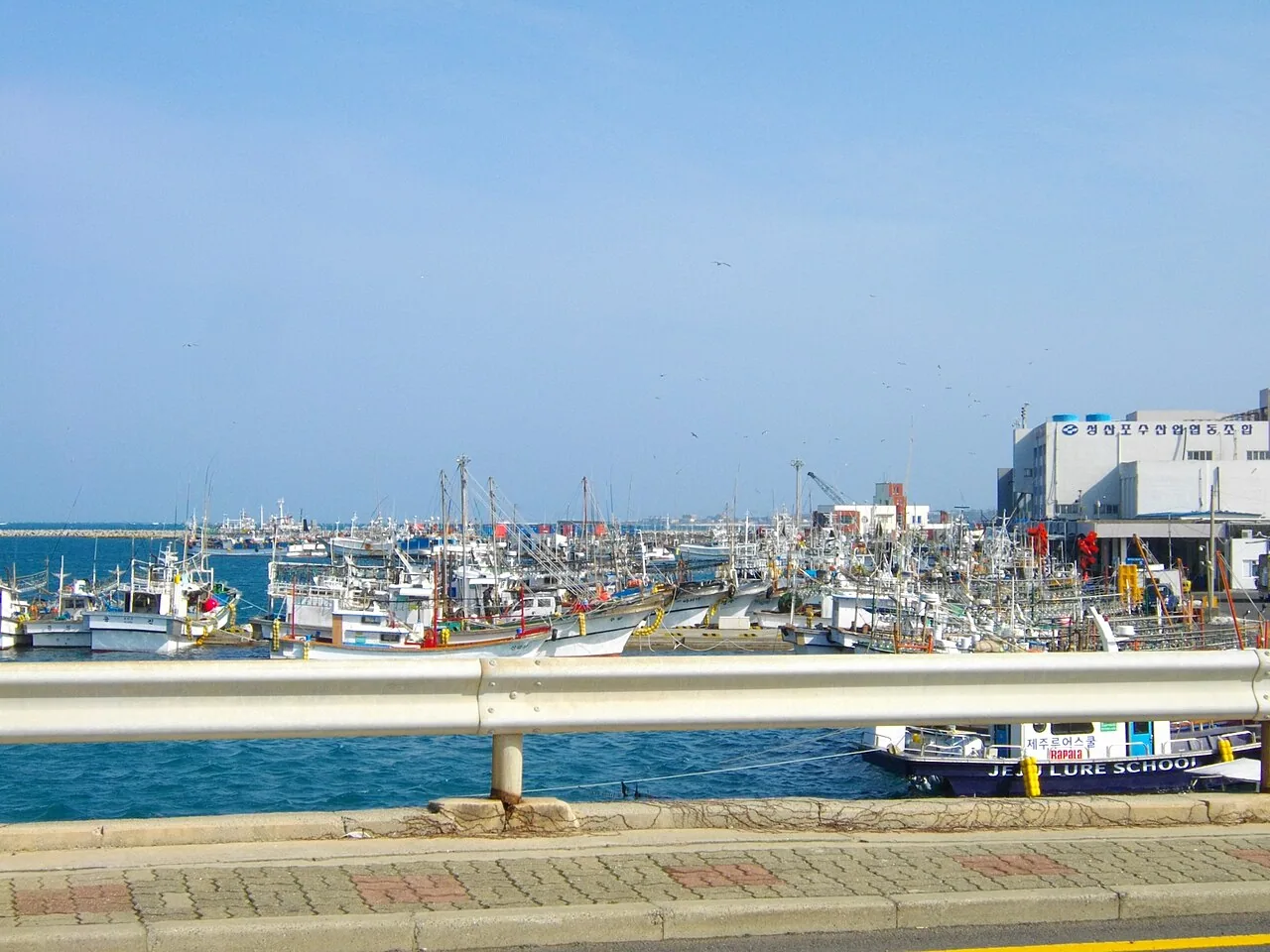
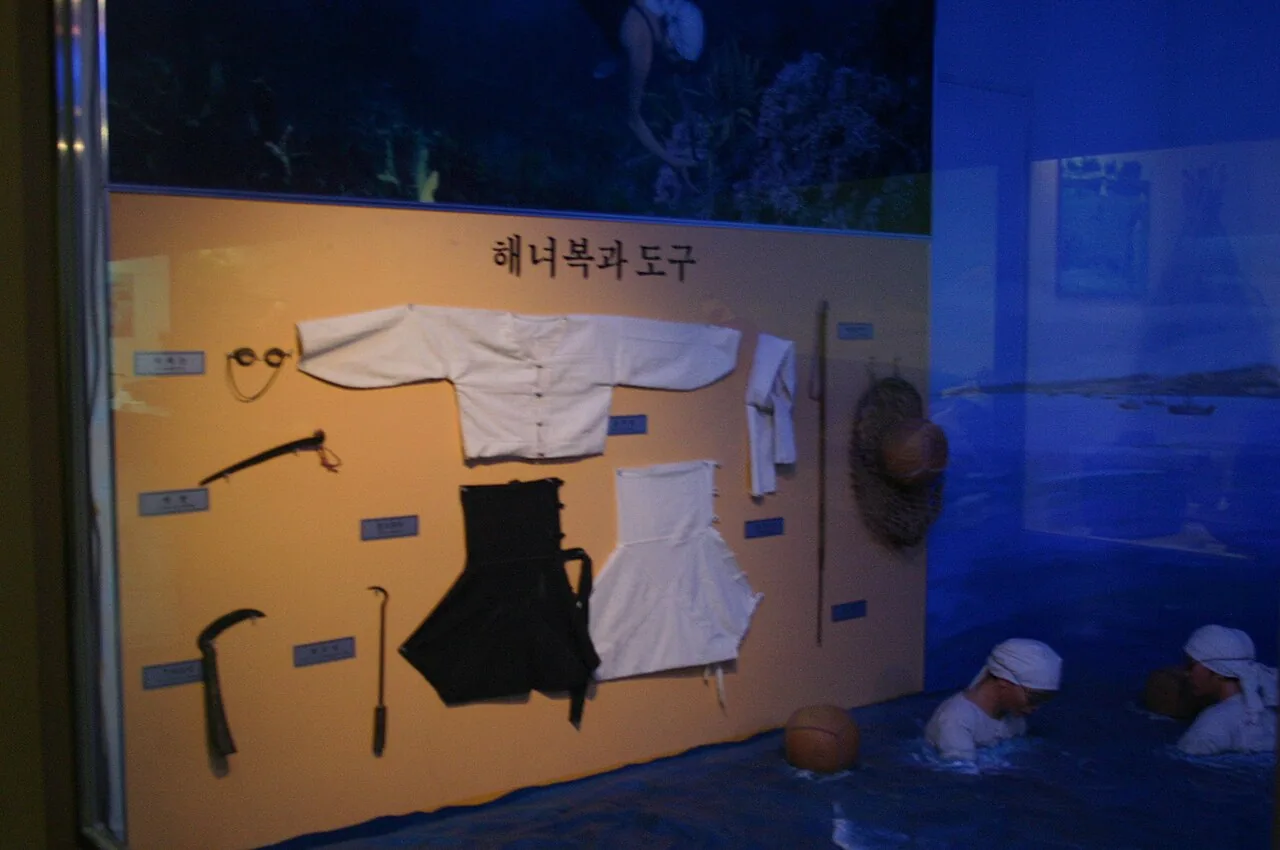
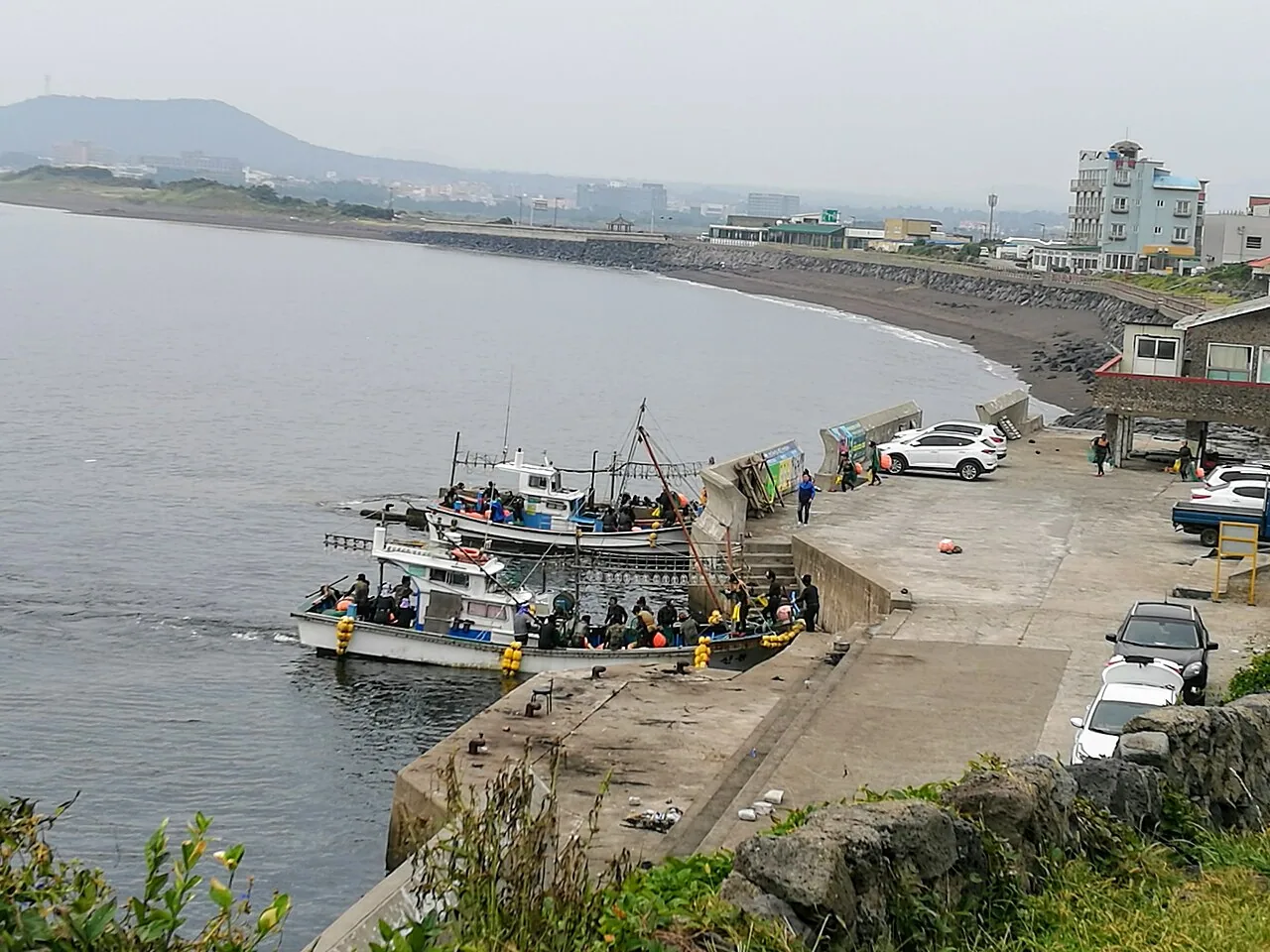
In the Haenyeo Museum, pick out a float beside the diving clothes and look for the net that carries the catch beneath it. At sea the float marks the diver’s position and gives her something to hold between dives. When you next pass an east-coast village, a cluster of shifting floats offshore tells you something about the work taking place below.
A volcano built in shallow water
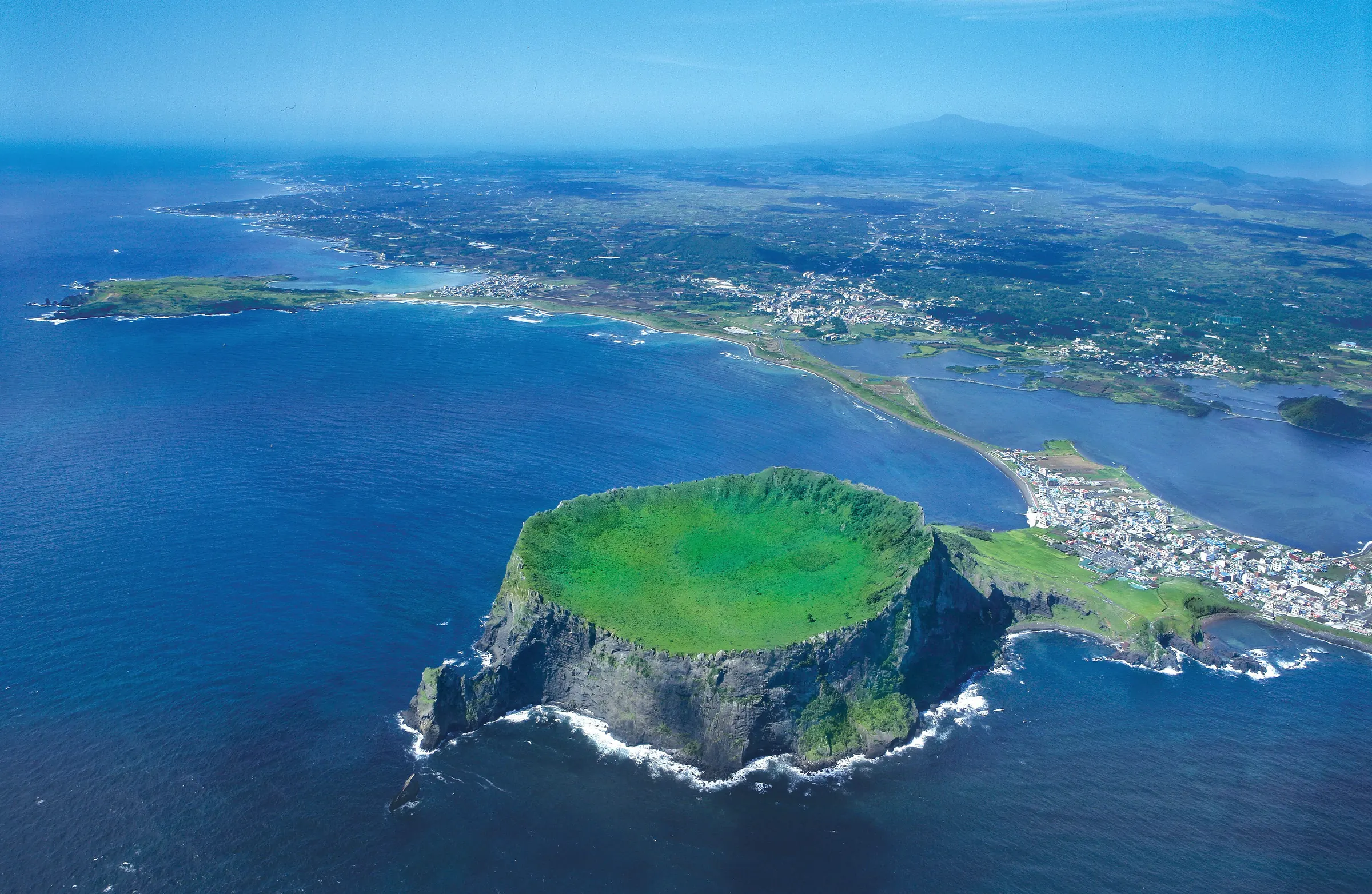
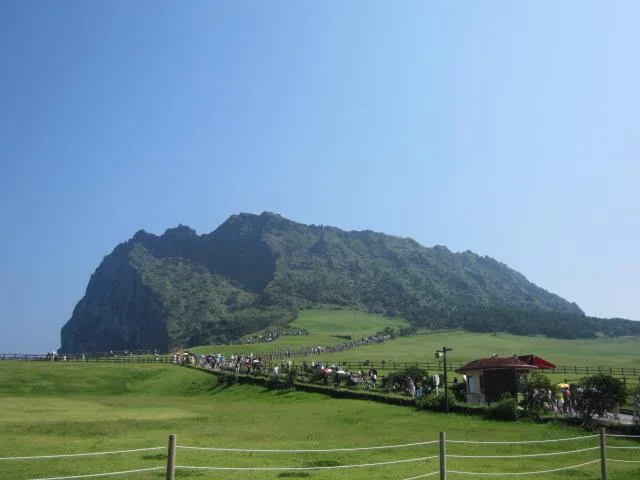
From Gwangchigi, Seongsan has steep outer walls and an almost level-looking top. Magma met shallow seawater here. The explosive eruptions heaped fragments around the vent and built the tuff cone you see today. Compare the silhouette from dry land with its outline on a map, then decide whether to climb for a view into the crater.
Photo notebook
Related information
Explore the regional featuresJEJU HOW editors