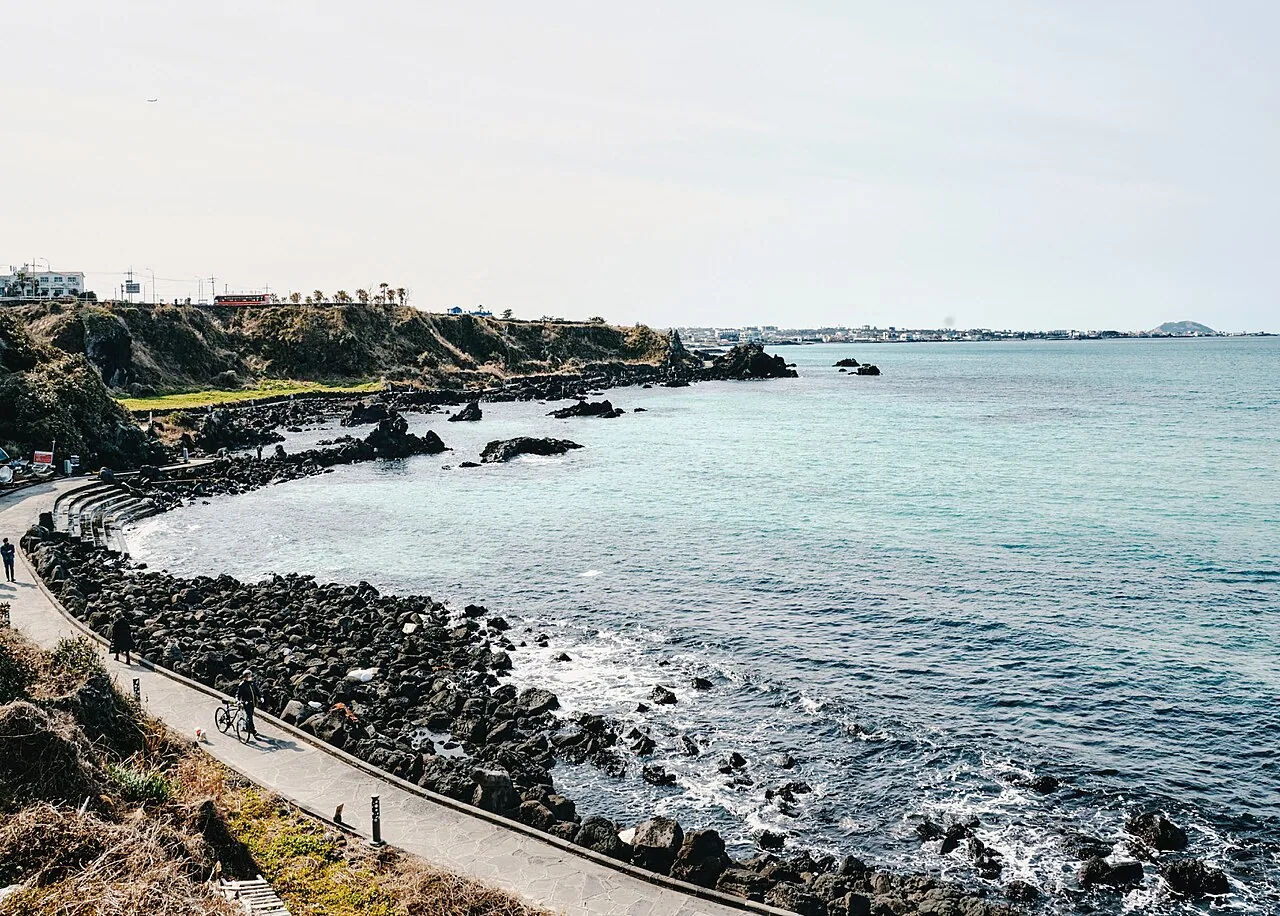
Travel west from Aewol past Hyeopjae Beach to Sinchang’s lighthouse and turbines.
In this guide
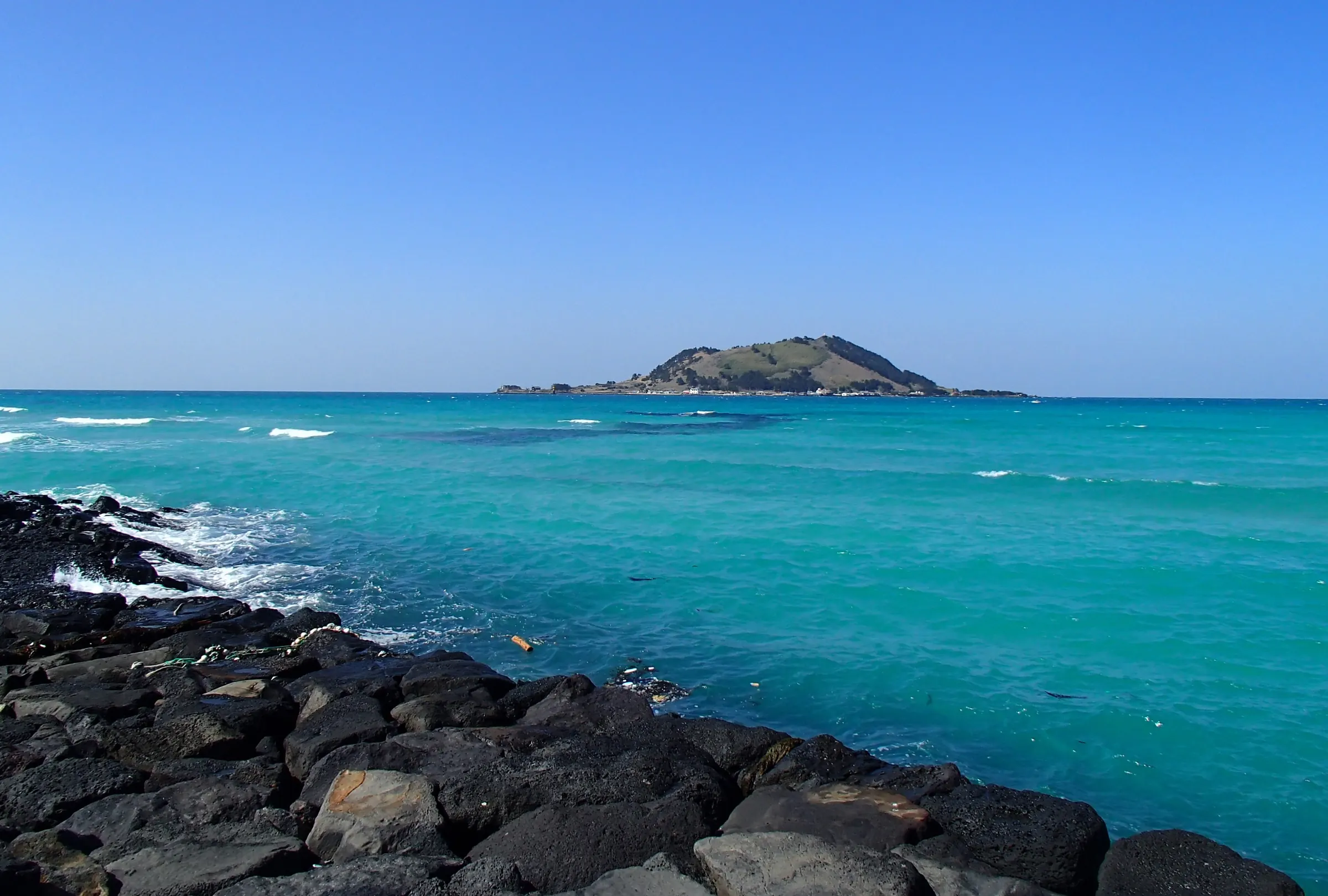
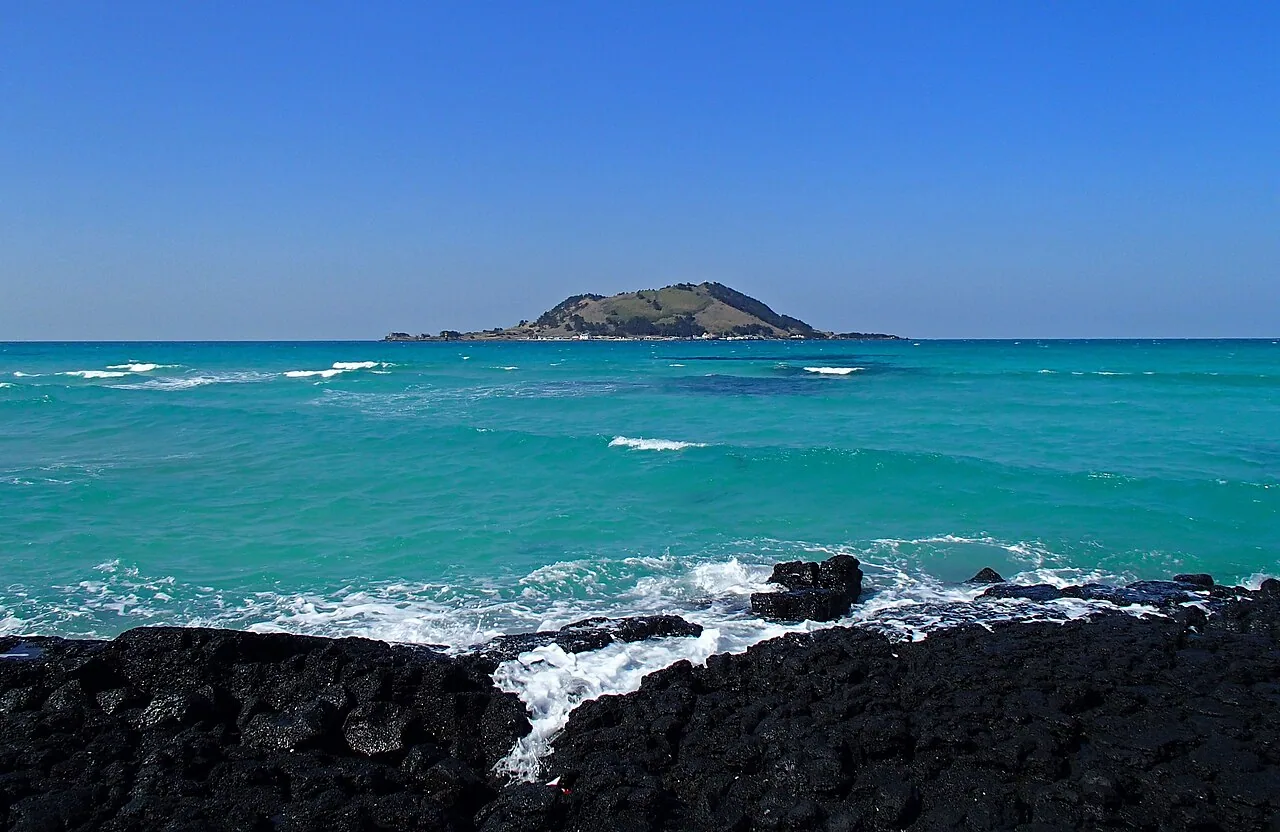
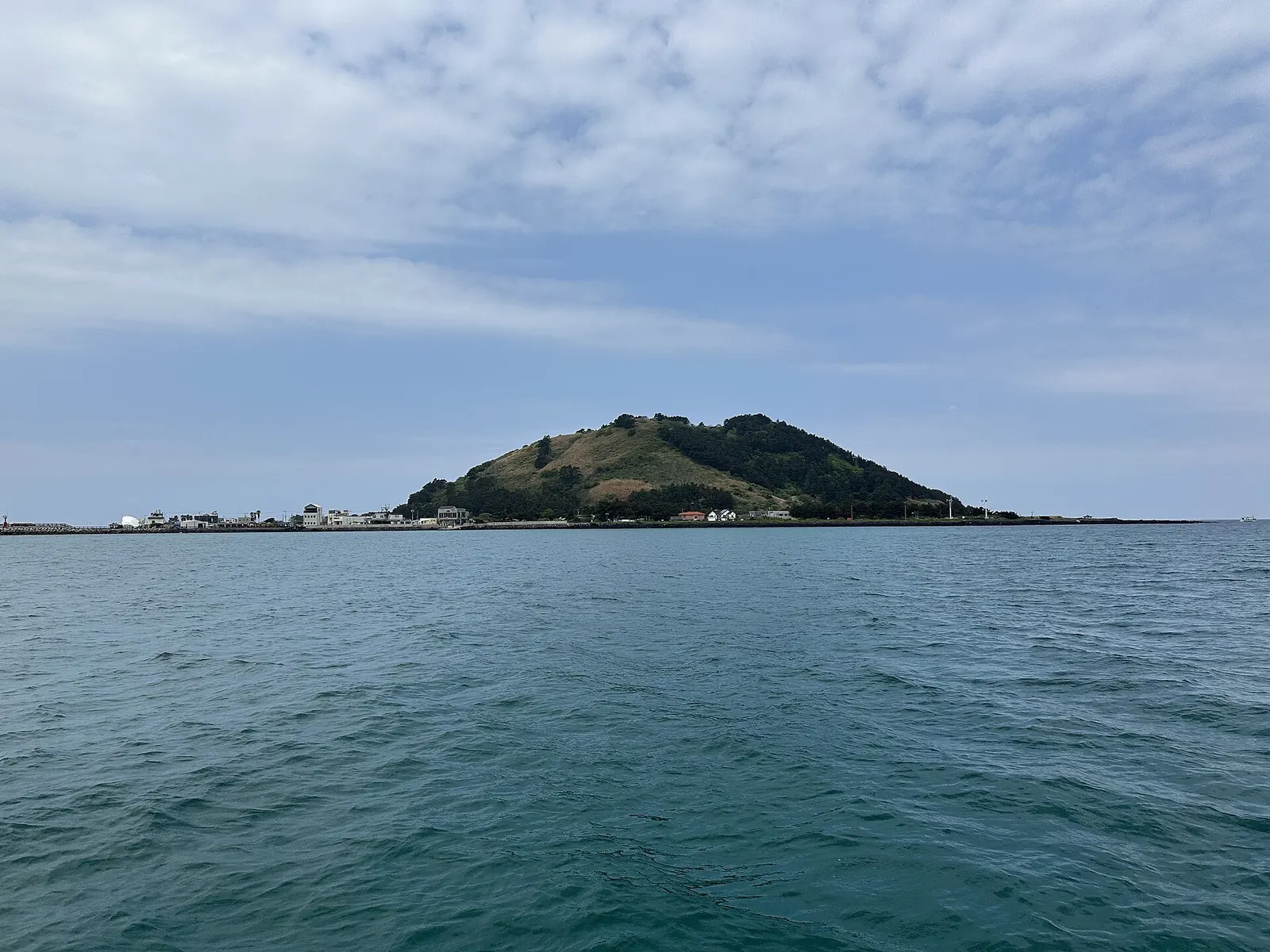
Keep Biyangdo in sight
As you walk the shore at Hyeopjae, keep the low hill of Biyangdo in view. A bend gives you a foreground of dark rock shelves, then pale sand takes their place. The distant island stays recognisable in both. Two photographs taken from dry ground, with the island in the same spot in the frame, make a neat record of this changing coastline.
A fishing wall below the wind turbines
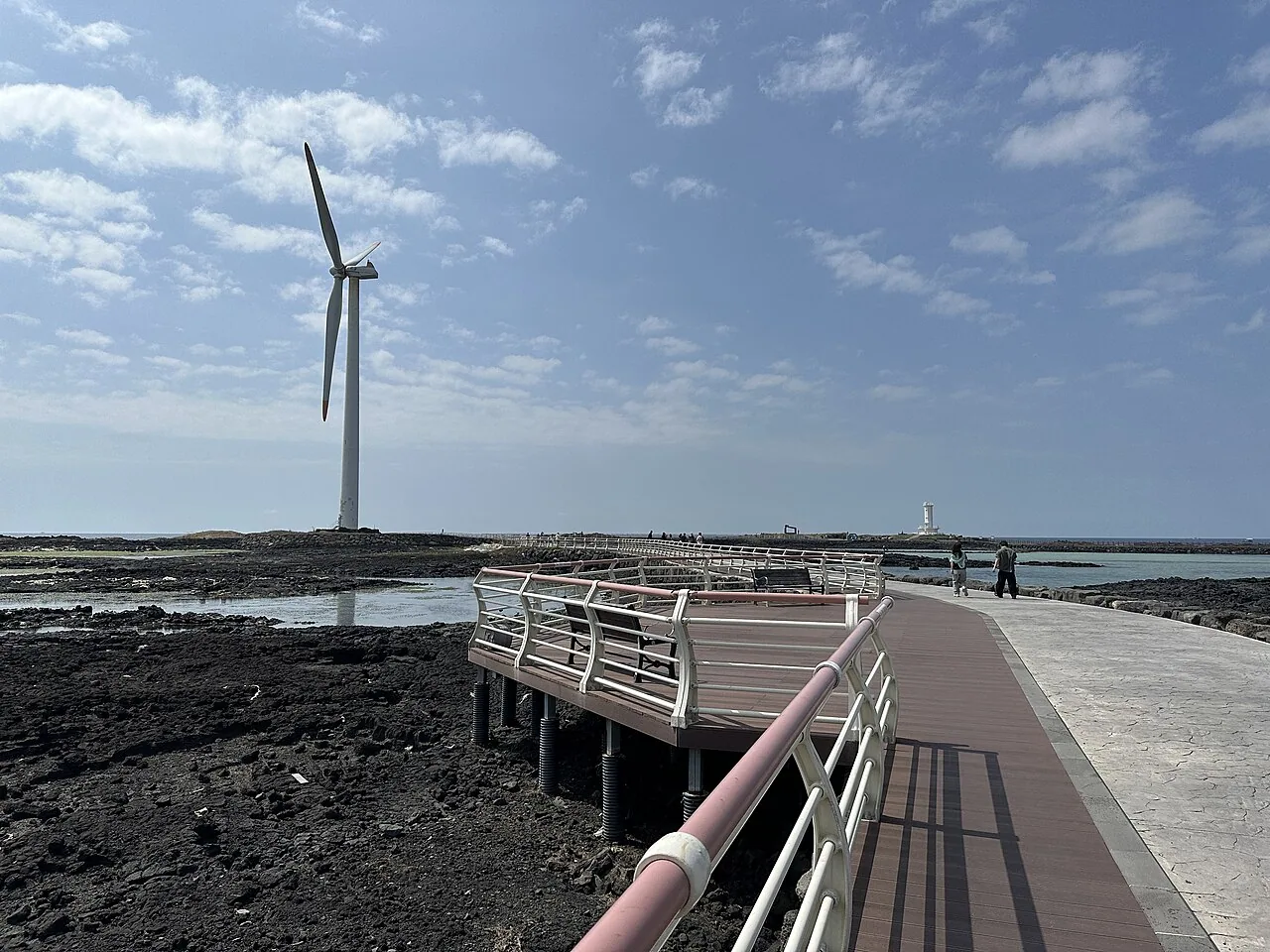
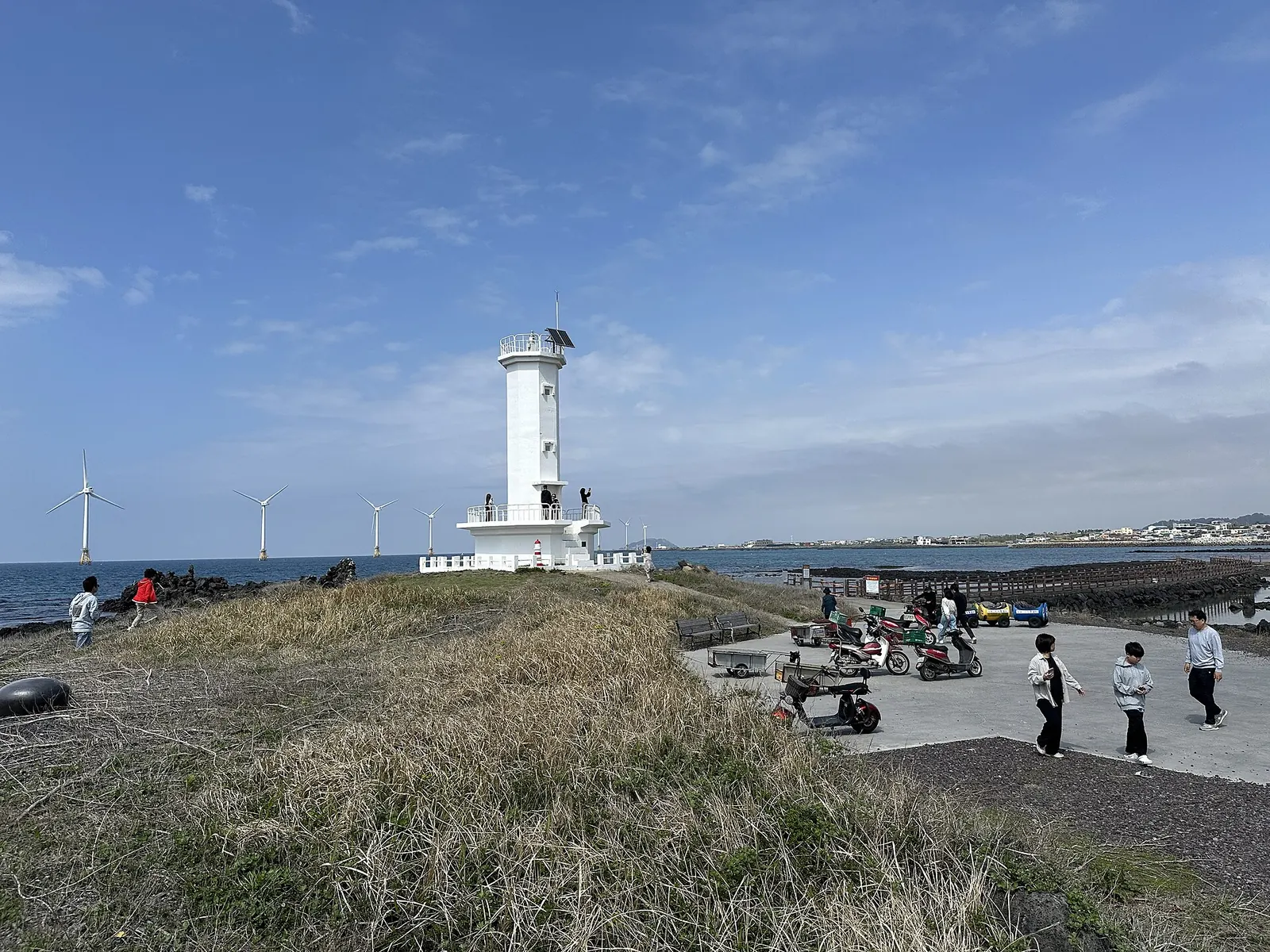
At Sinchang the turbine blades draw the eye upwards. Down by the water, the wondam display shows another way islanders worked with natural forces. These tidal fish traps used low stone enclosures to hold fish as the tide fell. Look at the outline first, then at the wall’s height against the waterline. It has a very different job from a field wall.
The dip in a layer of volcanic ash
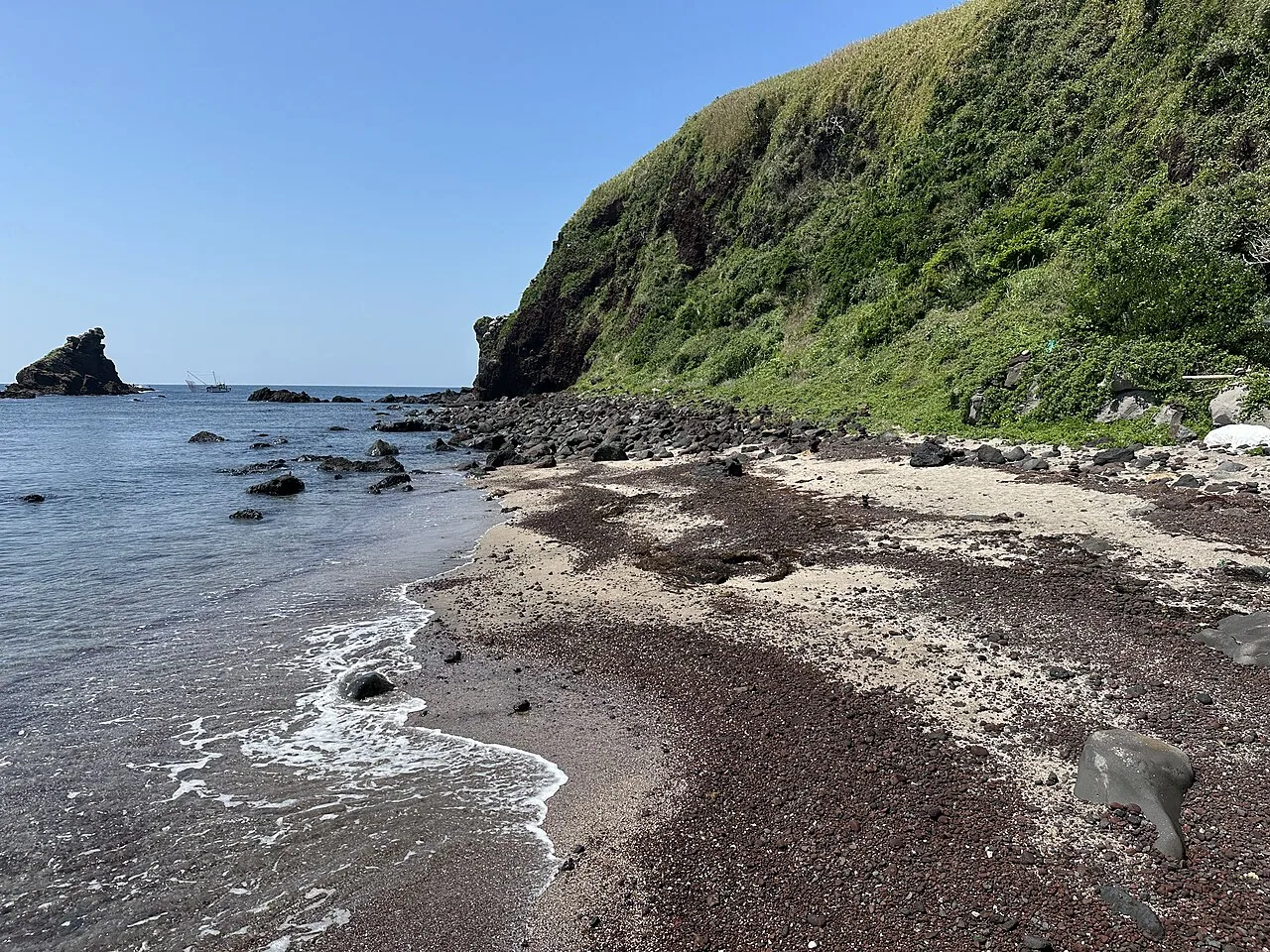
The sea cliff at Suwolbong exposes thin beds of volcanic ash. From the open geotrail, trace a few parallel bands, then look for a place where they dip around a larger rock. These impact sags record material landing while the ash was still soft. Keep a few layers above and below the rock in your photograph so the shape remains legible.
Photo notebook
Related information
Explore the regional featuresJEJU HOW editors