First issue · Island textures / Food & markets
The market and the soup pot
A crab in a marinade, seaweed in a pork broth and millet dough in a basket. A closer look at the island table.
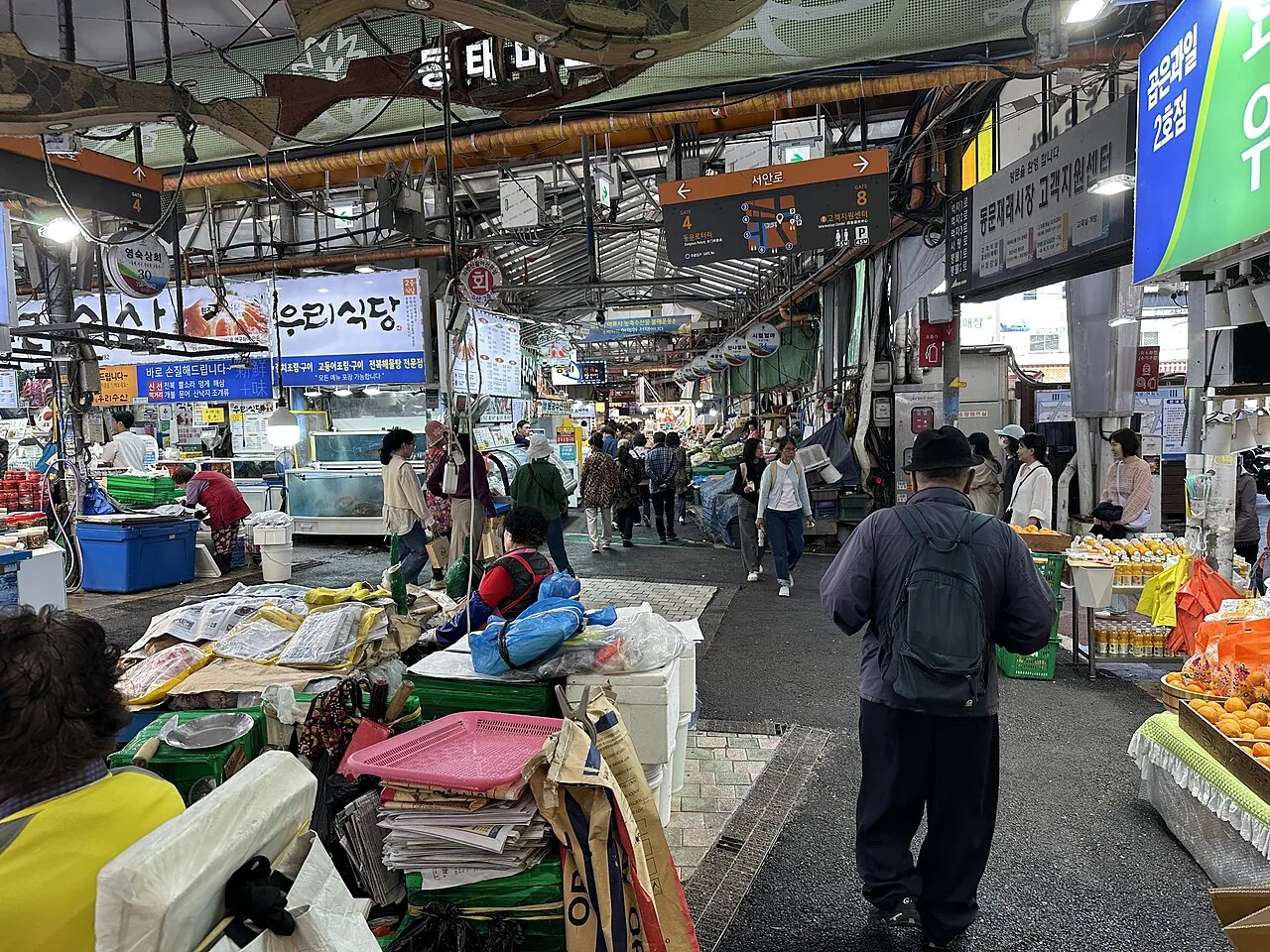
Beneath the roof of Dongmun Market in Jeju City, there are two scales to a shopping trip. Look up and the signs direct people to numbered exits. Look down and the view shrinks to a stack of trays, a cluster of orange fruit, the contents of a single dish.
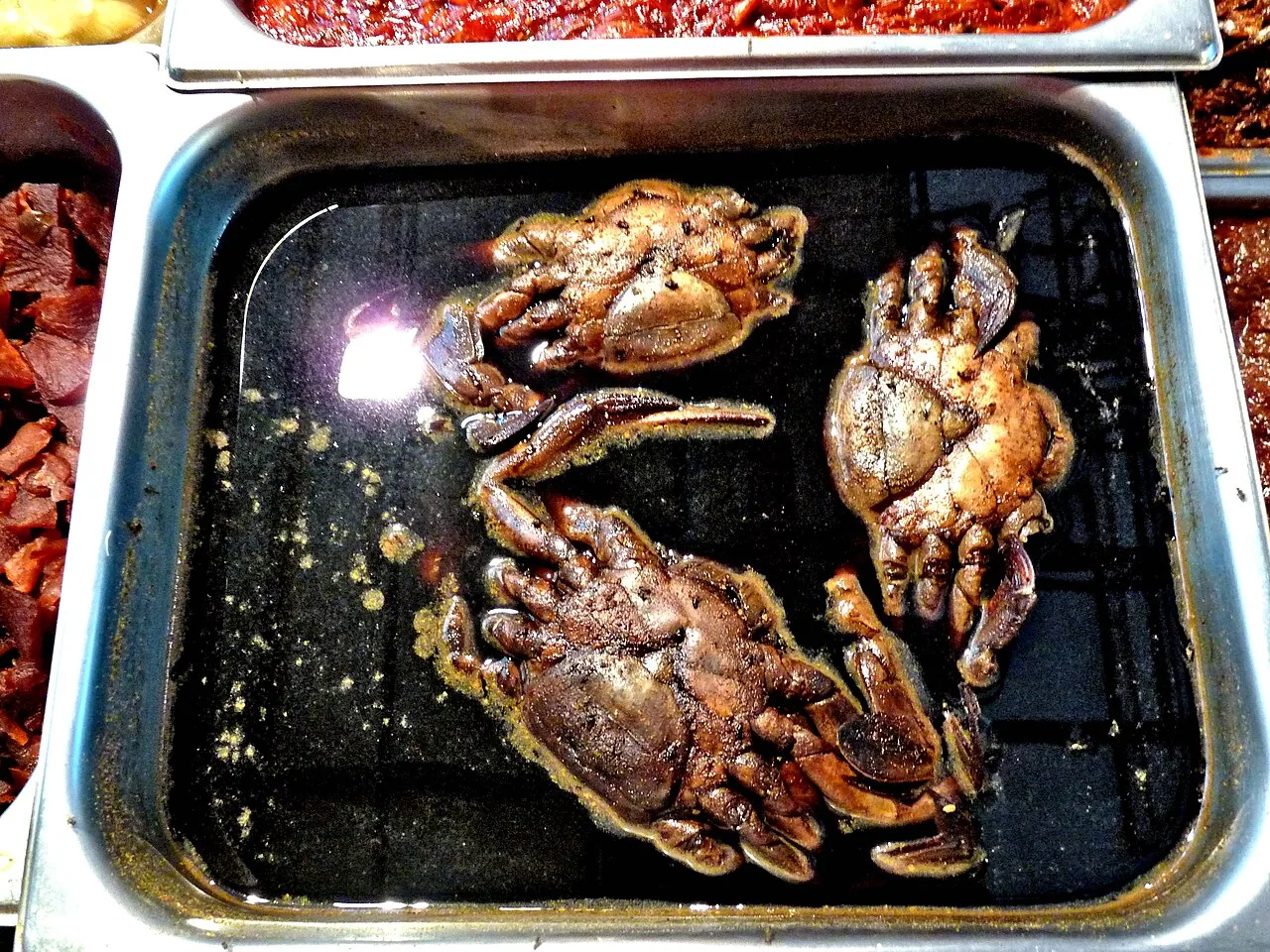
A shallow tray of crabs
It takes a moment to find the outline of a whole crab in the marinade. Legs disappear below the dark surface. A thin lit edge picks out a shell and one claw reaches past its neighbour. Just above the tray is a sliver of something bright red. Both dishes catch the same market light.
These crabs have already been seasoned. Elsewhere in the aisle, tubs, baskets and little dishes show how food is divided up to be taken home. A market makes the early stages of a meal visible. You can look at the shape of an ingredient and see some of the work that happens before it ever reaches a table.
Gulfweed in pork broth
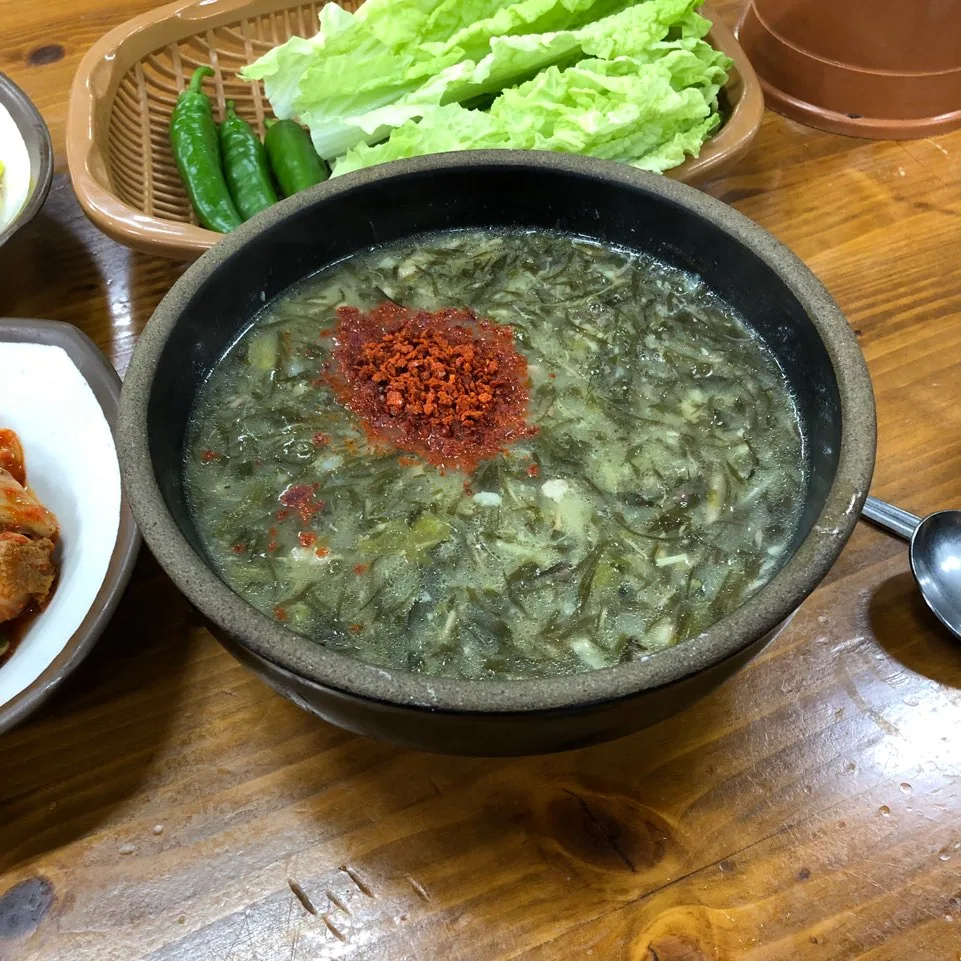
At the table, a black rim encloses a bowl of momguk. Fine pieces of seaweed run through the pale stock, their grey-green colour picked out by a small heap of red seasoning. The first part of the name is a Jeju word for gulfweed. Guk is the Korean word for soup.
The ingredient that the name leaves out is pork broth. Something gathered at the shore goes into stock made with meat, and the strands of seaweed give no immediate clue to what is underneath. In another island dish, gogi-guksu, slices of pork sit in plain view on top of the noodles.
A basket beside the pot
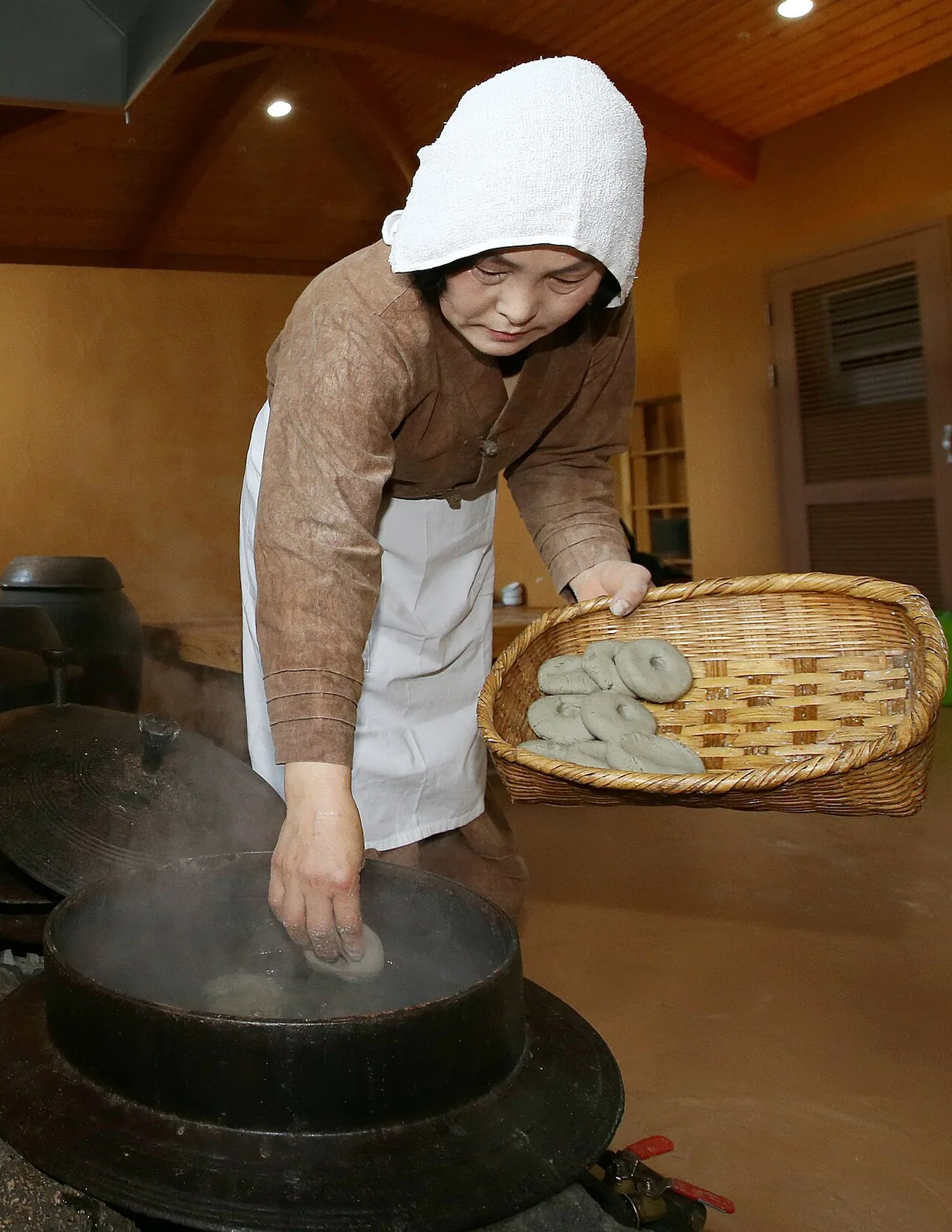
The last photograph takes us out of Dongmun to a demonstration in Seongeup Folk Village. Traditional omegi-tteok is made with glutinous millet. The cakes in the basket have been flattened and indented in the middle. The hand poised over the pot gives a better idea of their size than any measurement could.
The basket tilts against the maker’s apron. Below it, steam softens the edge of the cake going into the water. A crab beneath a dark marinade, gulfweed in broth, millet dough in a pot. In each photograph something is disappearing from sight. The hands and the vessels preserve a small part of what goes into a meal.