First issue · Island textures / Woodland
The island beneath the canopy
From the shade of Bijarim to the woods at Eorimok, the forest asks your eyes to change scale.
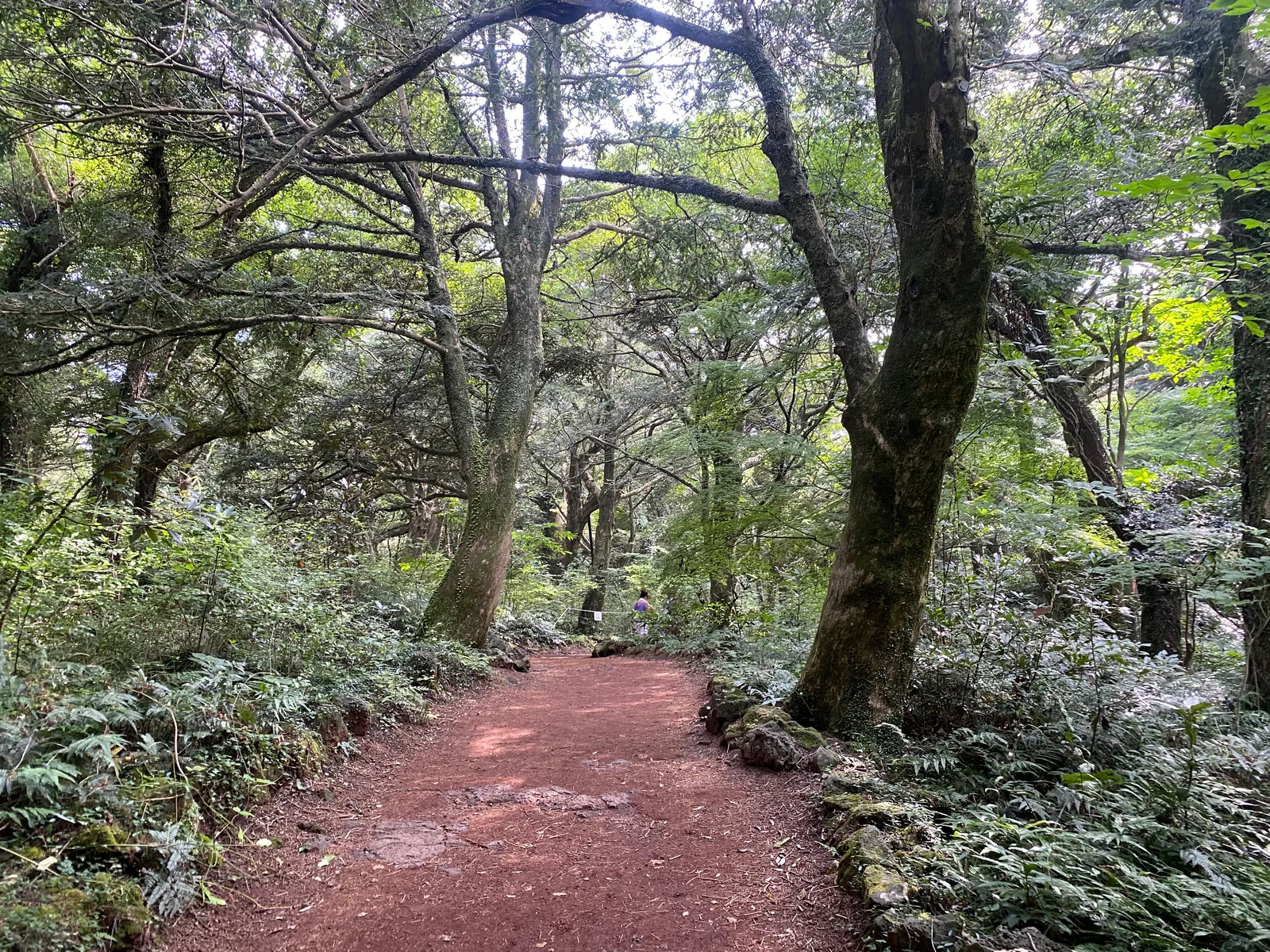
On the coast there is almost always a horizon. At Bijarim, in northeastern Jeju, it disappears between two trees. In its place you begin to notice the bend of a branch, or a leaf caught on the lip of a stone.
The space between trees
The bija in Bijarim’s Korean name, 비자림, is the nutmeg yew. The largest specimen need not be the first thing you look for. From the path, follow the trunks sideways until two overlap. What looked like one flat wall of green falls into layers.
Stay in one spot for three looks. Start with the bark nearest your shoulder, find the gap where the light comes through, then look as far into the trees as you can. The three frames have little in common, though your feet have not moved.
Where the ground starts to rise
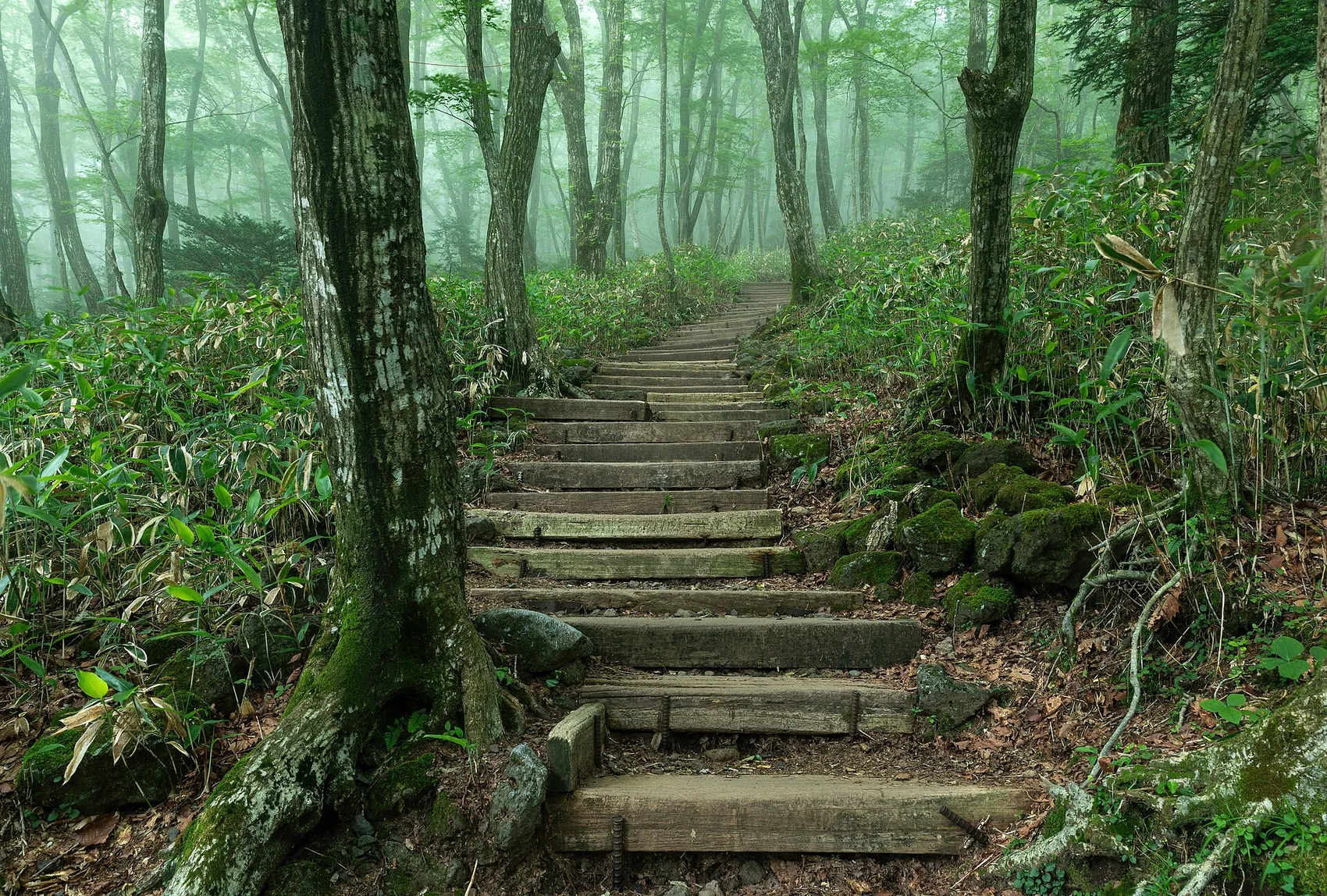
At Eorimok, the ground gives the picture a direction. The trunks still rise vertically, while the path turns up the mountainside. Set this image beside Bijarim and the two woods cease to be interchangeable patches of green on a map.
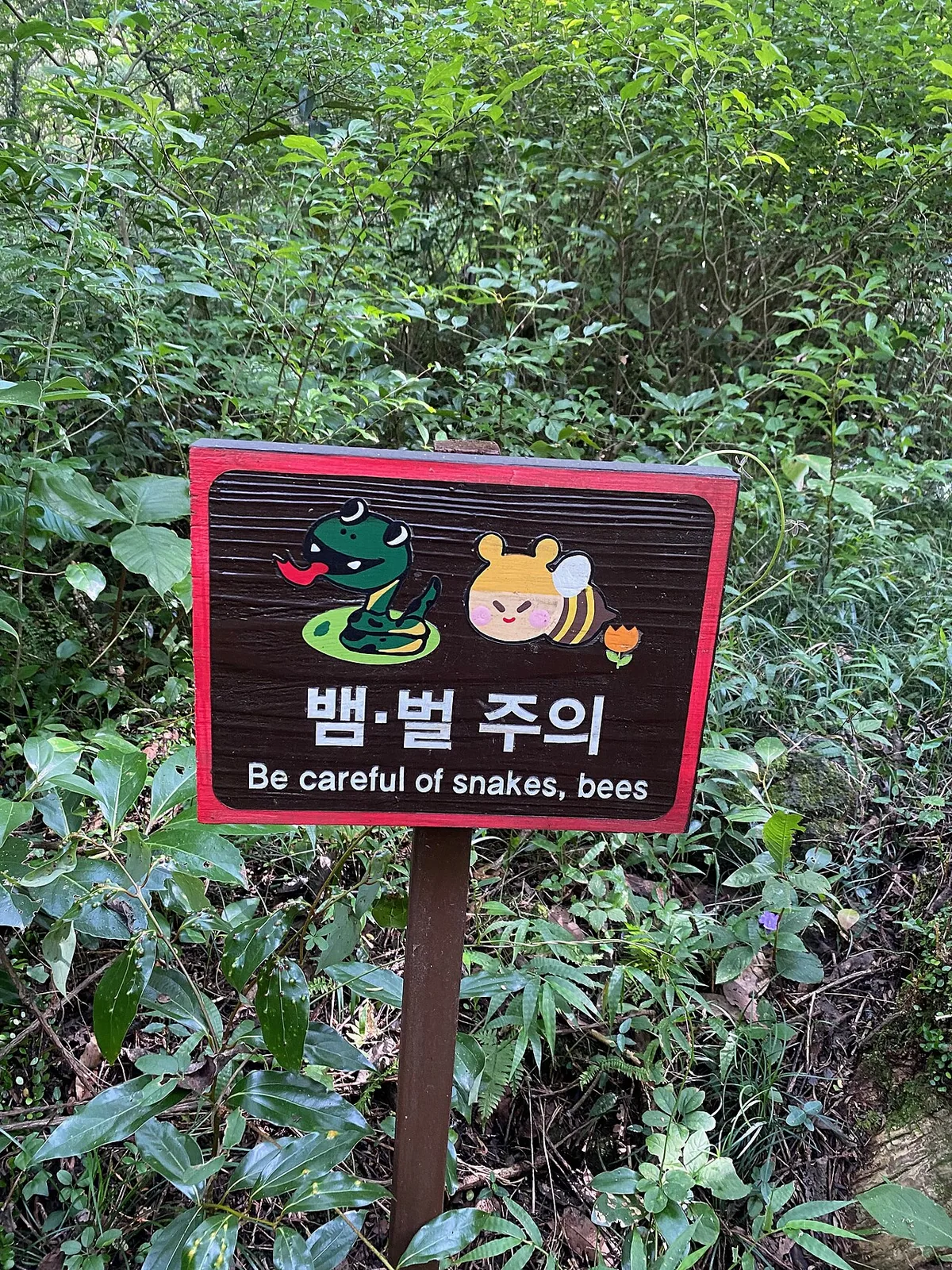
At a bend, look back. A slope seen from above reads differently from the same ground ahead of you. Wind inside the trees can also feel quite different from wind on open ground. The trail notice for Eorimok belongs alongside any forecast you checked down by the coast.
Where the sky returns
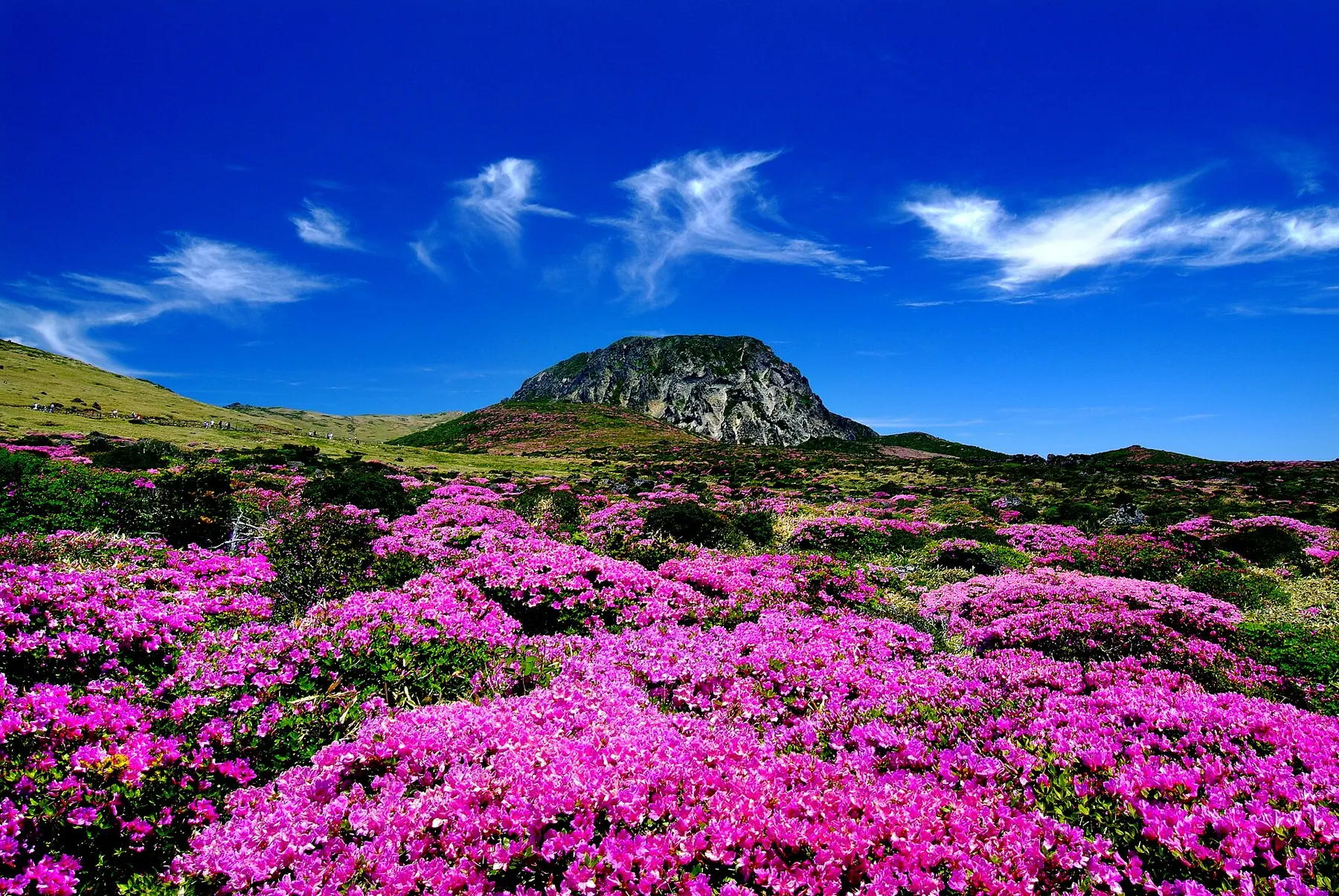
An open hillside restores the edge of the sky. In a flowering-season photograph, colour catches the eye first. Stay with it and the coloured bands begin to show the shape of the slope. The flowers belong to one moment in the mountain’s year.
There is no need to see all three views in a day. Keep the shift of scale instead, from a slit of light between trunks to an entire sky above a ridge. Back on the coast, the horizon may look a little different after that.