First issue · Island textures / Landforms
Before the lights go out in Seongsan
A town seen from a volcano, a crater seen from the sea. Two ways of reading the eastern edge of Jeju.
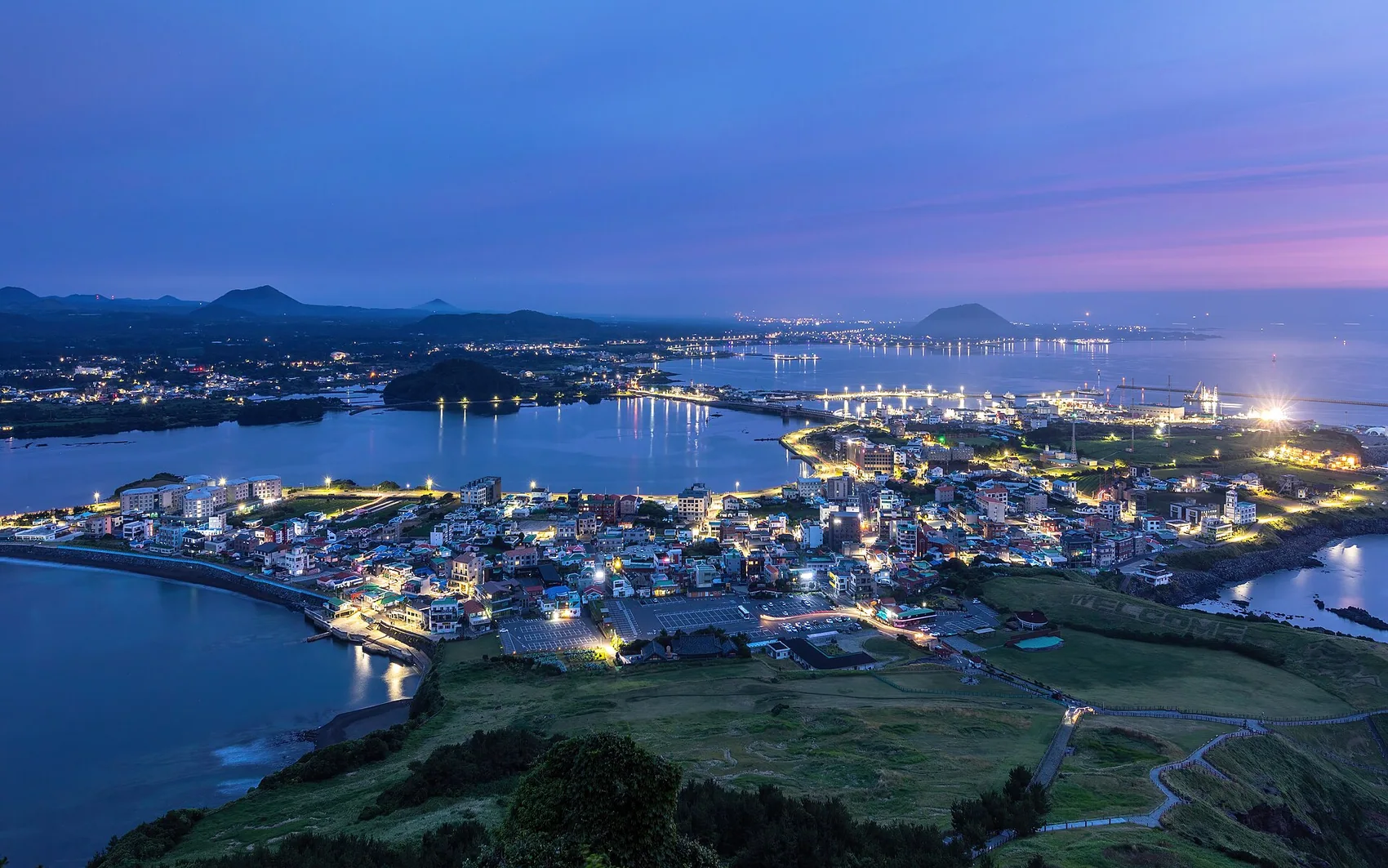
There is a moment before sunrise when the lights are a better map of Seongsan than the streets. In the photograph from the mountain, a line of lamps carries the eye across the water and on into neighbourhoods that the blue of early morning has almost swallowed.
Water on either side
The town occupies a narrow piece of ground with water on either side. Follow the bright curve on one shore and the houses come into focus. On the darker shore it is the reflections that give the edge away. Each lamp has a long pale twin stretching down into the sheltered water.
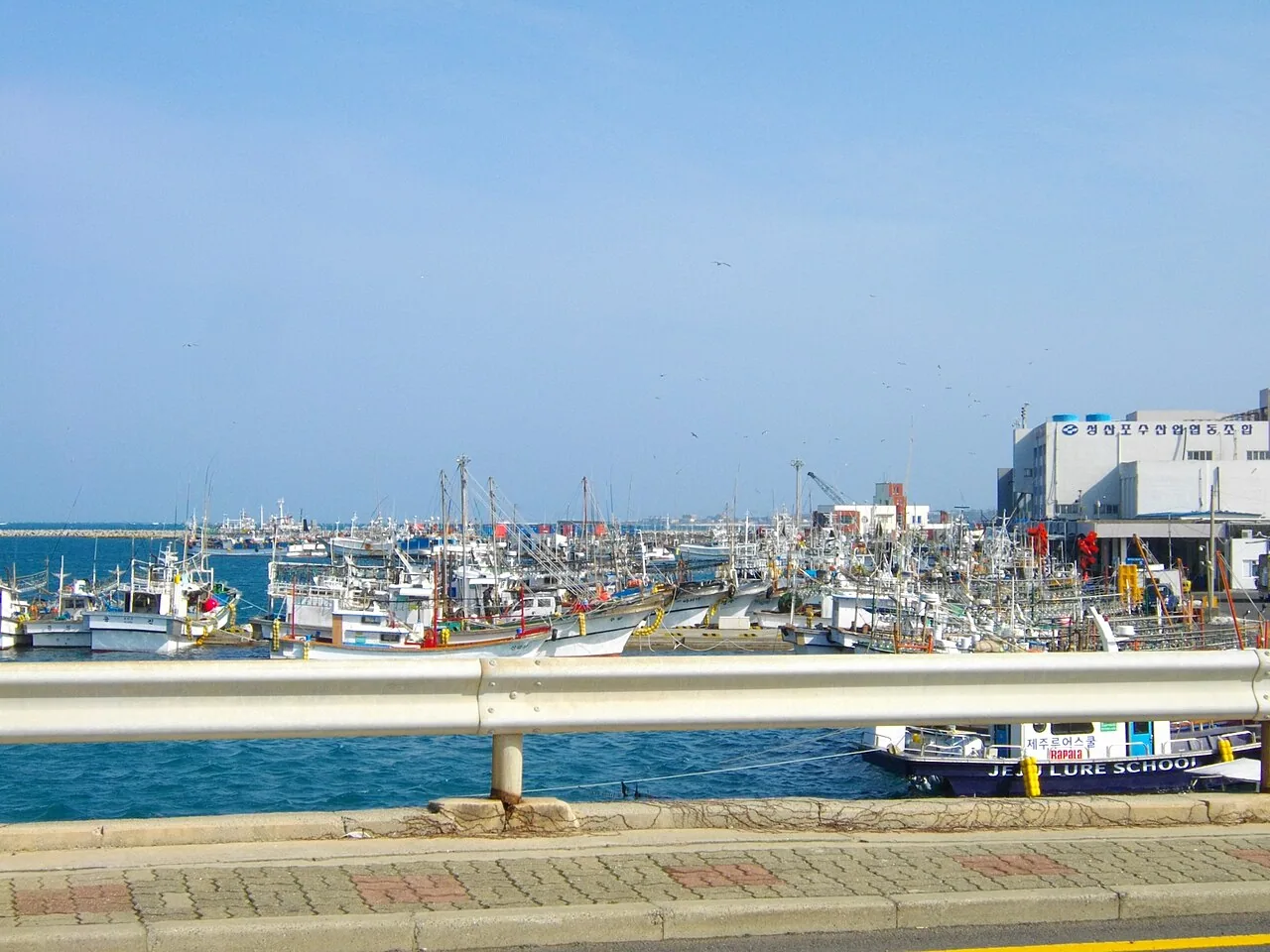
Daylight brings that distant patch of brightness down to street level. Boats sit at different angles. Their masts divide the sky into narrow strips and conceal much of the building behind. The road barrier in the foreground places the photographer very precisely, on the town side of a working harbour.
The face above the grass
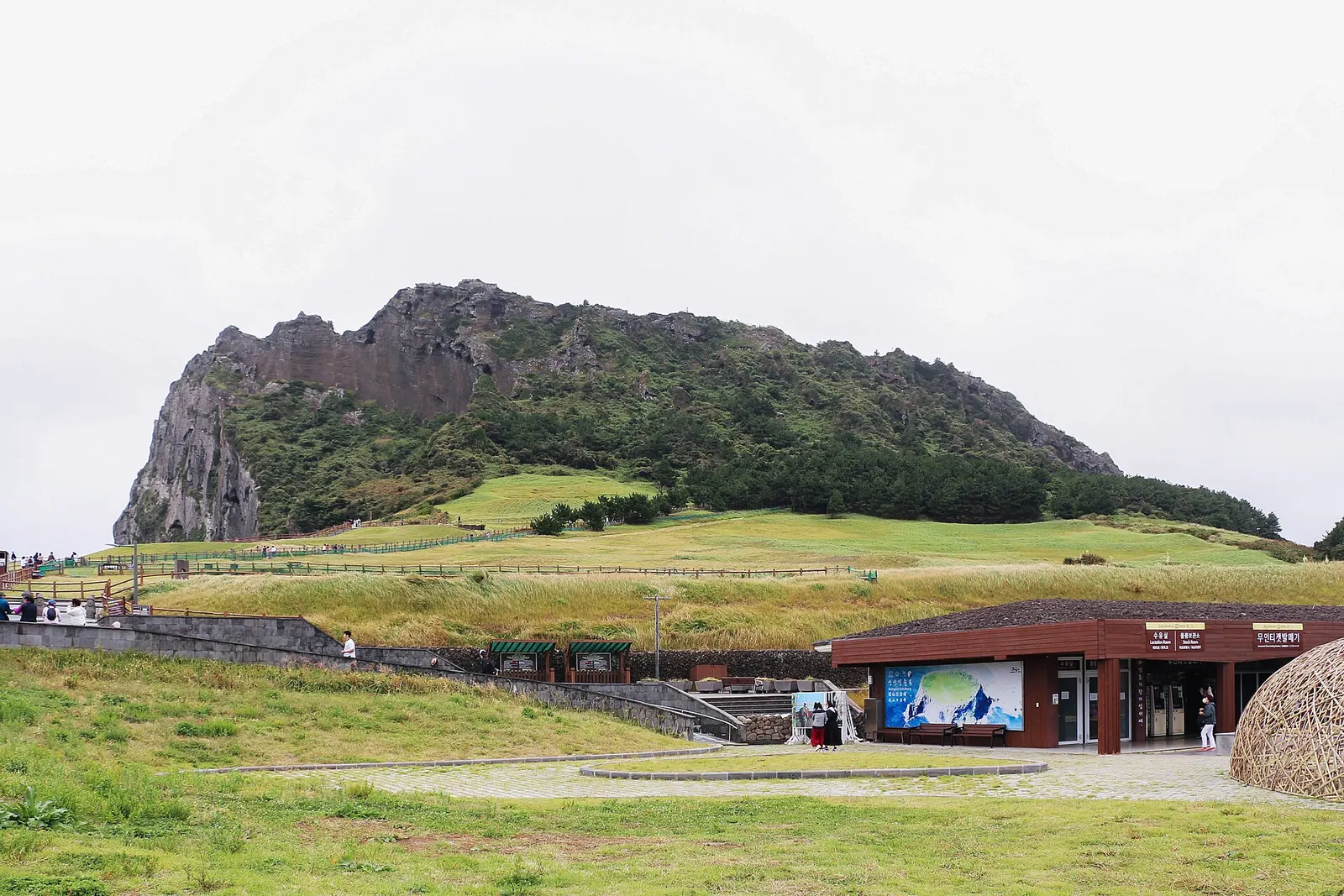
From the landward side a gentle sweep of grass ends abruptly against a near-vertical rock face. It is part of the outer rim of the tuff cone. Seen from the streets below, the jagged crest gives remarkably little away about the space it encloses on the other side.
The cone grew out of eruptions in shallow water. Contact between magma and seawater produced explosive bursts, laying down ash and fragments around the vent. Waves later cut into the outer wall and exposed the deposits. The same mountain carries both records, in its overall shape and in the material the sea has laid bare.
The rim from seaward
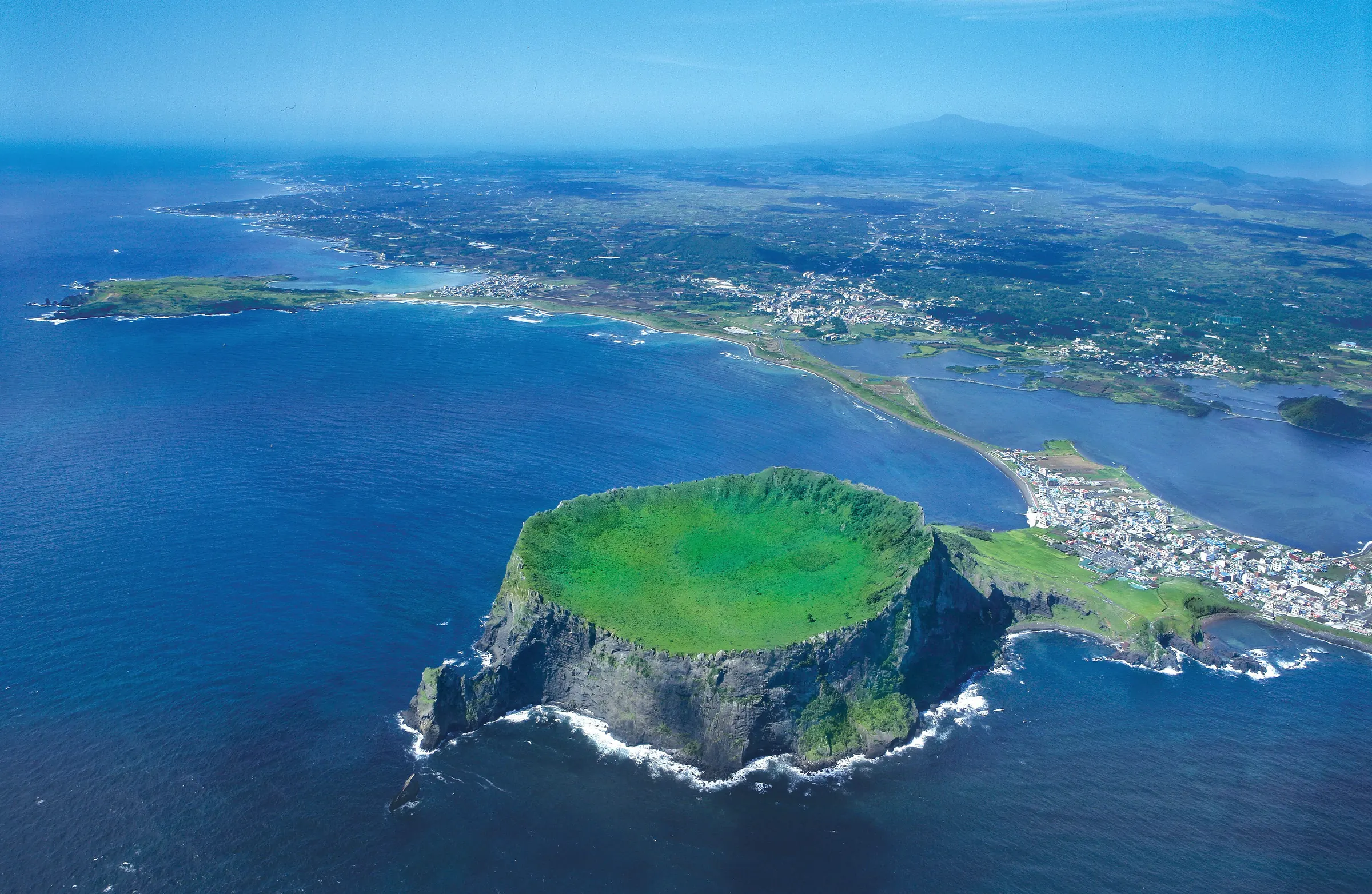
In the view from offshore the ridge closes into a ring. Grass slopes inwards towards a hollow while the outer cliff falls straight to a white fringe of surf. The green interior looks soft enough to fold. Follow it outwards as far as the lip and it ends in a startlingly sharp edge.
Beyond the rim are the roofs from the opening photograph. The viewpoint has turned inside out. At dawn it looked down from the mountain towards the harbour. Now the mountain lies between the camera and the town. The narrow strip of houses is still recognisable, a way home visible across an entire crater.