First issue · Island textures / Rural life
Room for the wind
At Woljeong-ri, a low wall separates a lane from a field. Across eastern Jeju, the edges of fields, courtyards and beaches tell different stories.
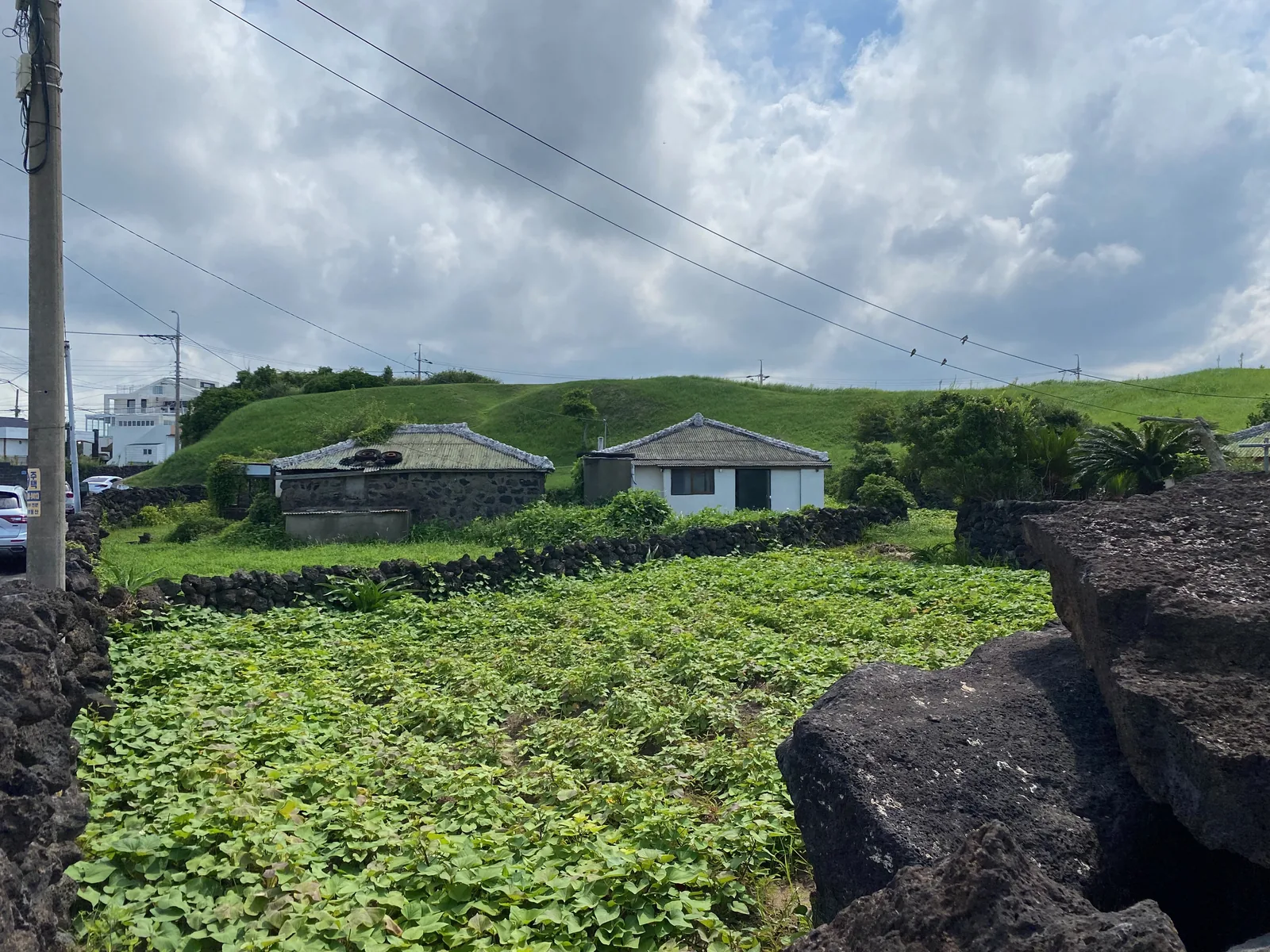
The closest thing to the camera in Woljeong-ri is a roughly shaped black stone. Step back with your eyes and it becomes part of a wall. Behind it are leaves, another line of stone and a pair of roofs. The beach can wait a moment. There is plenty to see in this small piece of ground.
Where one field meets the next
A field wall is a batdam. Farmers clearing the volcanic ground could put the stones to work at its edges. The uneven pieces rest against one another with small gaps that let air through. The wall marks a boundary and gives the crop shelter from wind, all with material lifted from the field itself.
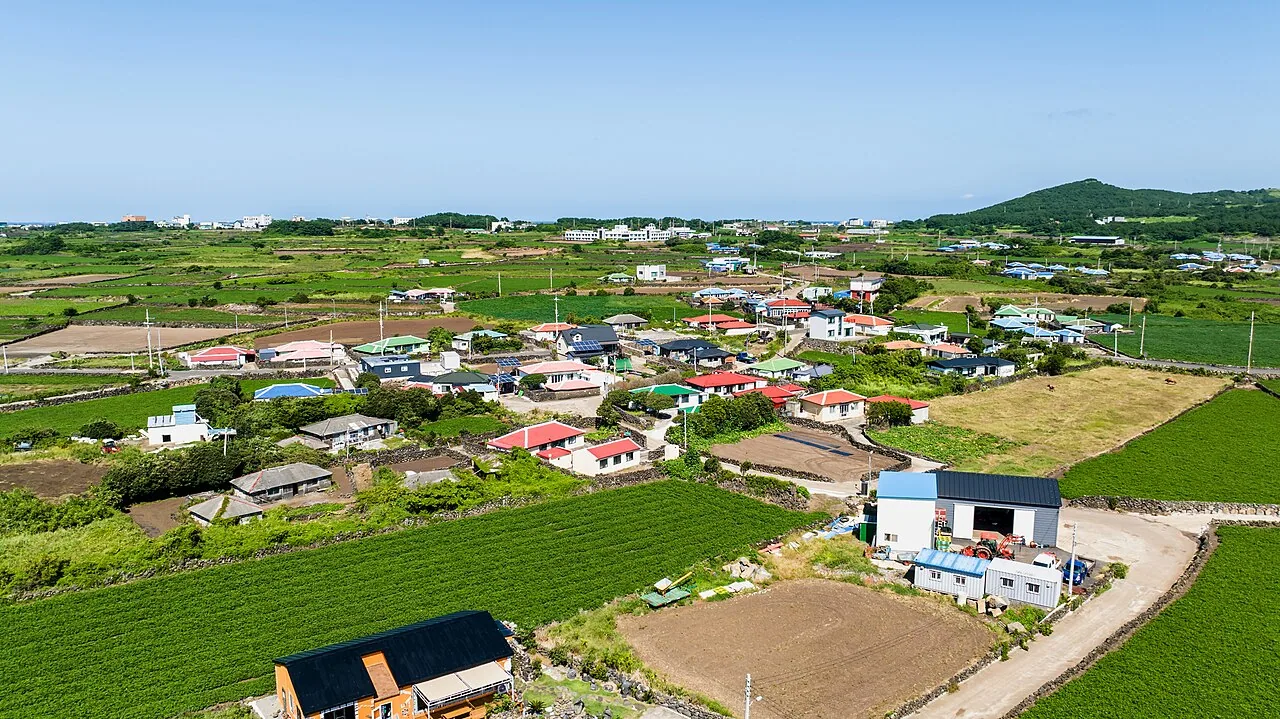
Across the water on Udo, height changes the scale. A boundary shrinks to a pencil line. One patch is green and the next shows bare soil. A lane divides beside a house and threads between plots. Their irregular outlines leave just enough clues to trace a way to a field and another way home.
On the courtyard side
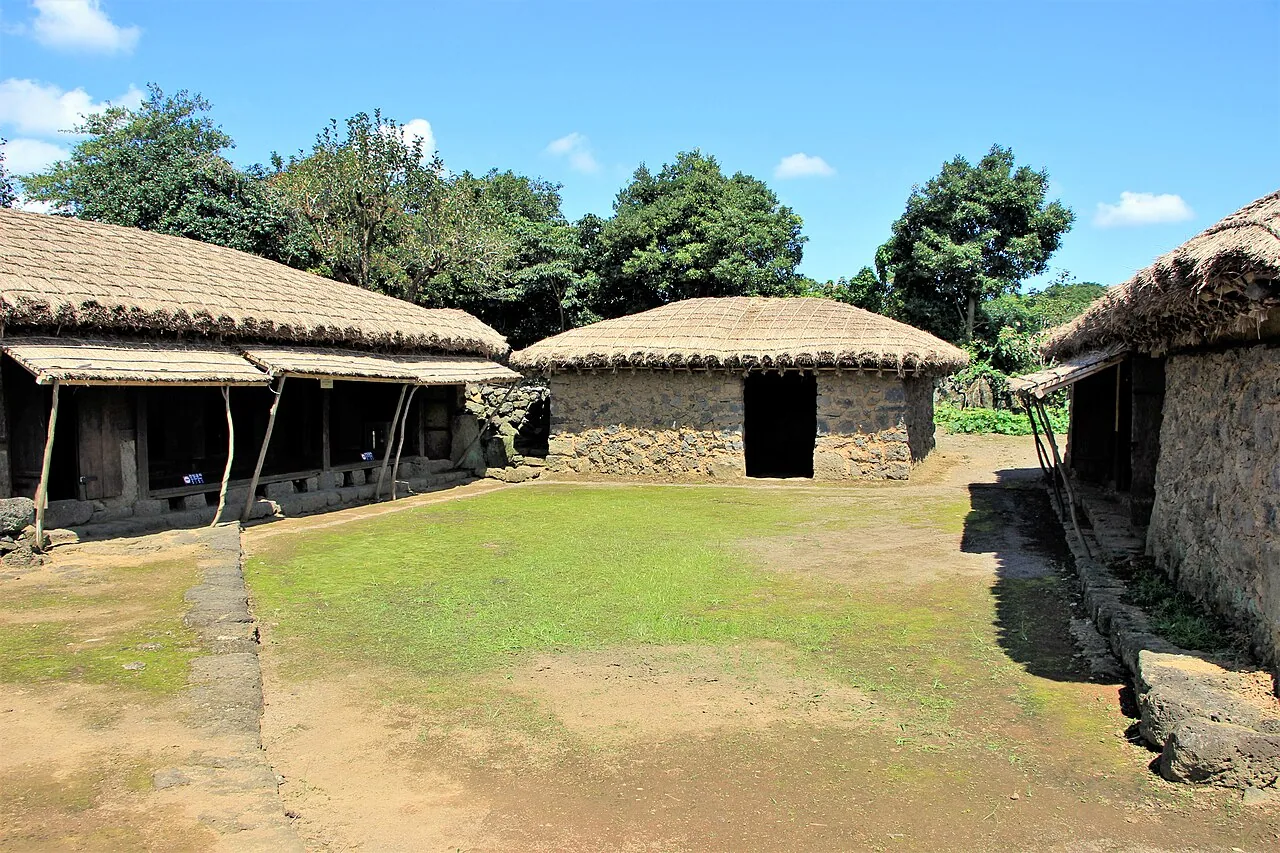
At an old house in Seongeup Folk Village, the stones have another job. The walls carry a thatched roof and leave an opening for a door. In the central building the dark doorway draws the eye first. Beside it, stones of different colours and shapes remain individually visible in the face of the wall.
Three runs of eaves fit into the frame. Sunlight bleaches the centre of the yard and stops short beneath the roofs. Out in the fields the eye travels over a wall towards the next plot. Here the walls draw it back to an open space shared by several doors, with shade close at hand.
Where the road finds the shore
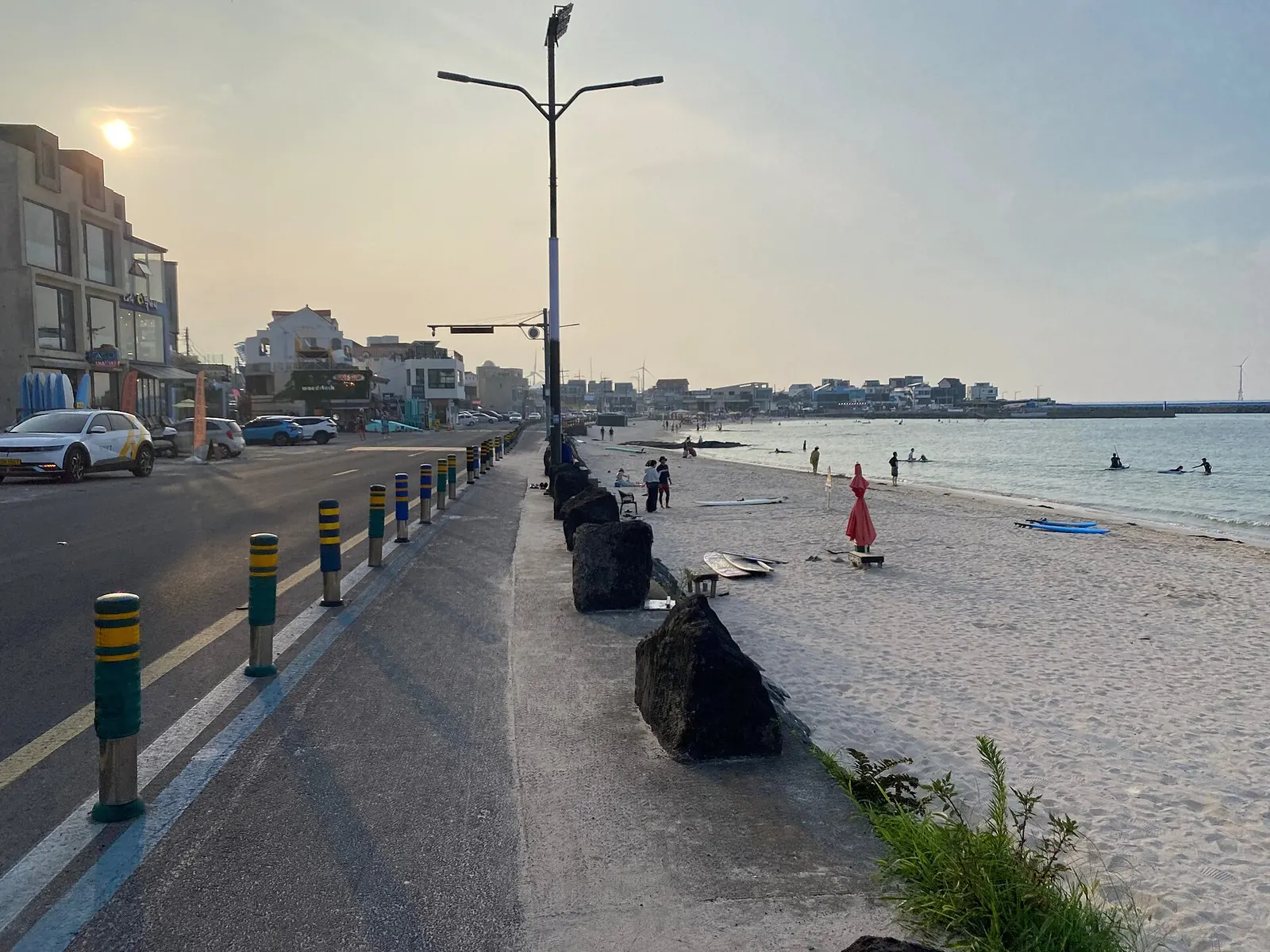
At the beach in Woljeong-ri, dark stones appear beside pale sand. There are cars and lamps on the street, surfboards laid down on the beach and small figures afloat further out. A few stones by the pavement mark a change you could recognise underfoot, from hard, level ground to sand that gives with every step.
Back at the field wall, one syllable now carries more weight. Bat means field. The word names the people’s use of the land as precisely as it names the stonework. On a return walk the dark lines separate into different things again, a crop boundary here, a house wall there, a scattering of rocks beside the beach.